







Key Takeaways:
- GeneDx genome sequencing through Gene-STEPS identified a GRIA2 variant that Ivy’s clinicians considered the explanation for her neurodevelopmental disorder and epilepsy.
- Testing both parents helped clarify Ivy’s results, showing that the GRIA2 variant was a new change not found in either parent.
- The genetic answer connected Ivy’s family with specialists, CureGRIN, and research into her specific variant.
- Additional research and Ivy’s clinical history helped inform a personalized medication decision. At her October 2026 interview, Emily reported that Ivy had been seizure-free since September 2025.
- Seizure control is an important milestone, while Ivy continues to need developmental therapies, vision support, and coordinated care.
From newborn routines to a first unexpected seizure
Ivy was born in November 2024 after what Emily describes as a smooth pregnancy and birth. She and her husband, Will, brought their first child home and settled into life as a family.
One evening in March 2025, just days after Emily returned to work, Ivy fell asleep in her arms after coming home from daycare. About ten minutes later, her eyes opened and fixed upward. Her arms stiffened, and she began shaking.
Emily recorded the episode, a decision she is grateful she made because the video showed clinicians exactly what had happened. After speaking with their pediatrician’s after-hours service, the family went to a nearby hospital. A short daytime electroencephalogram, or EEG, conducted the next morning did not capture a seizure, and the initial evaluation did not identify a cause. A follow-up neurology appointment and another short EEG also left the family without an answer.
Diagnosing focal epilepsy and looking for the cause
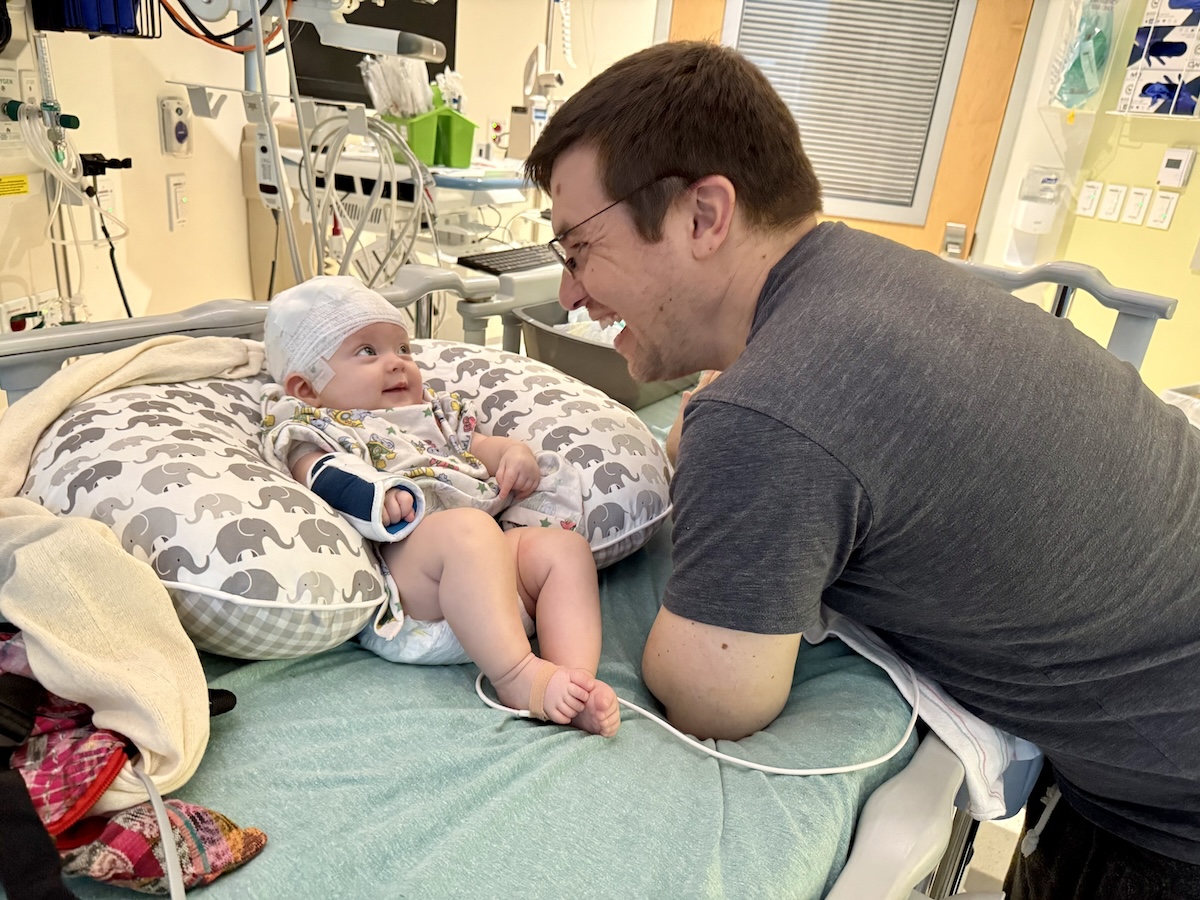
Just over one week after the first episode, Ivy had another episode and the family went directly to Boston Children’s Hospital. During a multiday admission, continuous EEG monitoring captured seizures. Clinicians diagnosed focal epilepsy and began investigating why the seizures were happening. An MRI and testing for infectious and metabolic causes did not provide an explanation.
During the admission, the team invited Emily and Will to participate in Gene-STEPS, a research study using rapid genome sequencing to investigate infantile epilepsy. For Emily, it was meaningful that the testing fit naturally into Ivy’s hospital evaluation, rather than requiring the family to begin a separate search while managing a new epilepsy diagnosis.
Early genetic testing is increasingly part of the evaluation for infantile epilepsy. The American Epilepsy Society’s clinical practice guideline recommends combining a child’s history and examination with early MRI, EEG, and genetic testing to help classify new-onset epilepsy in infants.[1] A National Society of Genetic Counselors guideline, endorsed by the American Epilepsy Society, also recommends exome or genome sequencing as first-tier testing for unexplained epilepsy.[2]
The genetic turning point: How parental testing clarified Ivy’s results
Ivy’s initial testing looked at her DNA alone. Emily recalls that the results arrived in 10 days and included three variants of uncertain significance, or VUS, meaning there was not yet enough evidence to determine whether the changes were related to her condition. One was in GRIA2, a gene that provides instructions for part of the AMPA receptor, which helps carry excitatory signals between brain cells.
Emily and Will then provided samples so the team could compare Ivy’s results with both parents’ results, a process known as trio testing. The full process took about six weeks from Ivy’s hospital admission because testing happened sequentially rather than as a trio from the start.
The parental results provided important context. Two variants were inherited from Will, who did not have symptoms, and Ivy’s clinicians did not consider them an explanation for her condition. The GRIA2 variant was different: it was de novo, meaning it was not found in either parent and was a new change in Ivy. Both the GeneDx report and Ivy’s care team considered the variant the explanation for her symptoms.
Ivy’s care team has since described her condition as GRIA2-related neurodevelopmental disorder and developmental and epileptic encephalopathy, or DEE. DEE refers to a group of severe epilepsies that begin early in life, in which both seizures and the underlying cause can affect a child’s development.
The family received the trio results on May 9, 2025, just before Emily’s first Mother’s Day. The timing made an expected celebration emotionally complicated as she began to understand what the result could mean for her daughter. It also gave the family a more focused path forward.
“A lot of new things became options with that result in hand,” Emily says.
Beyond a gene name: Broader care and a more personalized treatment decision
Before the diagnosis, Ivy’s care centered primarily on seizures: hospital stays, EEGs, neurology visits, and repeated medication changes. The GRIA2 result broadened that focus by connecting the family with clinicians experienced in related conditions and helping the care team consider Ivy’s health as a whole.
That broader view mattered because Ivy was also experiencing global developmental delay, low muscle tone, and cerebral visual impairment, or CVI, a vision problem caused by how the brain processes visual information. Her care expanded to include physical, occupational, and speech therapy; support from a teacher for the visually impaired; neuro-ophthalmology; sleep medicine; and medically complex care coordination. Emily believes the genetic diagnosis made it easier to connect these needs and access appropriate support.
Meanwhile, Ivy’s seizures remained difficult to control. Emily describes trying four anti-seizure medications in different doses and combinations, with periods of improvement followed by breakthrough seizures that increasingly occurred in clusters.
Not every genetic variant affects the body in the same way. Through additional research into how Ivy’s specific variant affected the AMPA receptor, her care team gained information that helped guide the search for another treatment. They discussed what was known, what remained uncertain, and decided to try perampanel, a seizure medication that reduces AMPA receptor activity.
Ivy started a small dose on August 30, 2025. Emily reports that her last seizure was September 9, 2025. At the time of her October 2026 interview, Ivy had been seizure-free for more than a year.
Ivy’s experience shows how a genetic result can become a starting point for further investigation and individualized care, not an automatic prescription. A systematic review of genetic testing in epilepsy found that genetic diagnoses can inform treatment changes, including starting, stopping, or avoiding particular anti-seizure medications.[3]
Finding community and research connections through CureGRIN
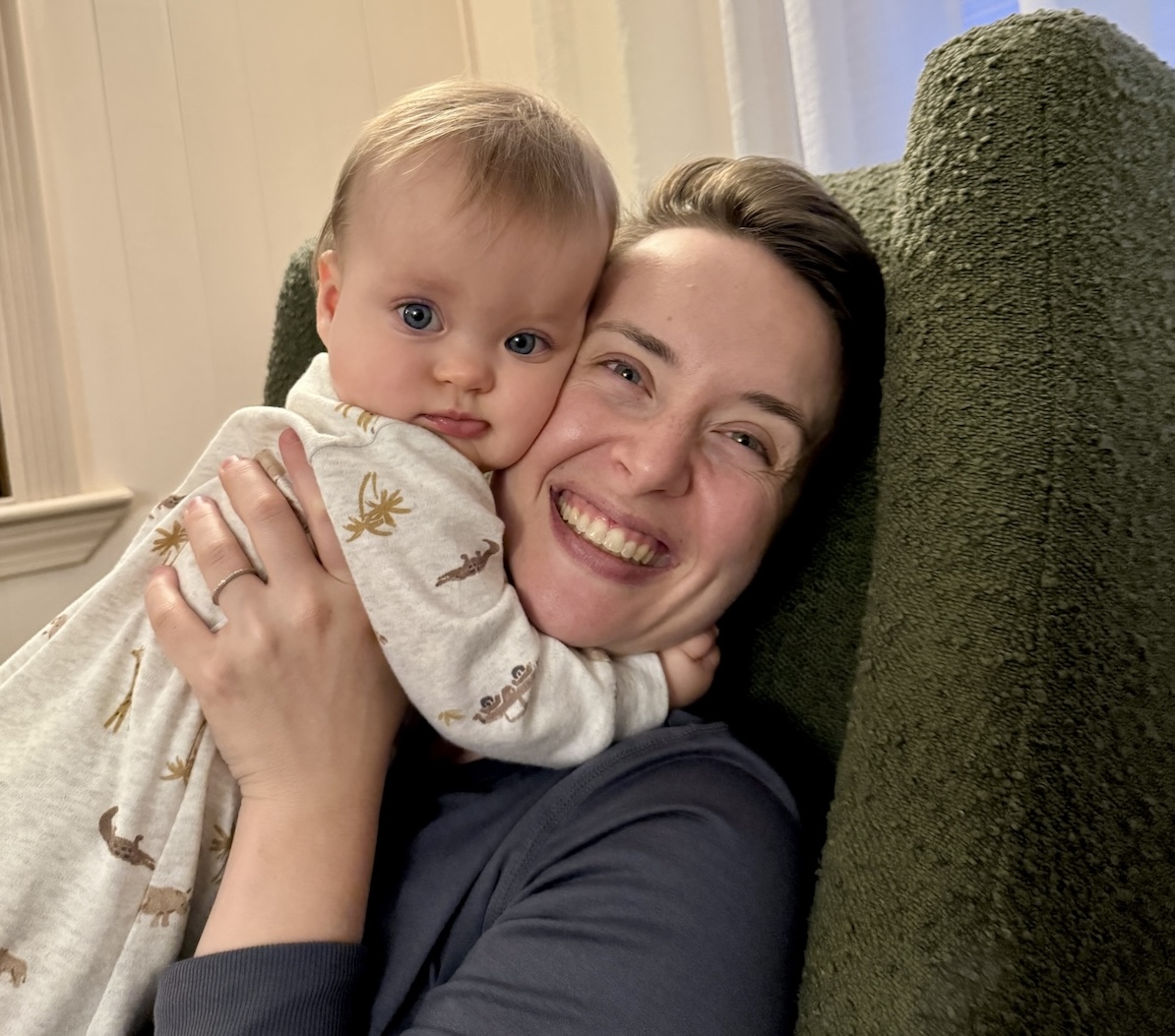
The result also connected Emily with CureGRIN Foundation, a patient advocacy organization supporting families affected by GRIA2-related and other GRI (GRIA, GRID, GRIK, and GRIN) disorders. Through an online group, she found parents sharing questions and experiences across many stages of childhood.
In July 2025, about two months after receiving Ivy’s results, Emily attended CureGRIN’s bi-annual in-person family and scientific conference. The event brought families, clinicians, and scientists together in a way that felt different from a series of separate appointments. Emily asked GRI experts about seizure medications, additional care needs, and complex care coordination; connected with researchers studying how variants affect receptor function; and met families who became lasting personal connections.
Those relationships also opened conversations about future research. Emily reports that a mouse model of Ivy’s variant is being developed with support from CureGRIN and that the variant has entered an early-stage antisense oligonucleotide, or ASO, design and development program through n-Lorem. These efforts are investigational, not established treatments, and may not ultimately lead to a therapy. For now, they represent possibilities to explore rather than promises.
“I feel like I’m connected to something rather than just navigating stuff totally alone,” Emily says.
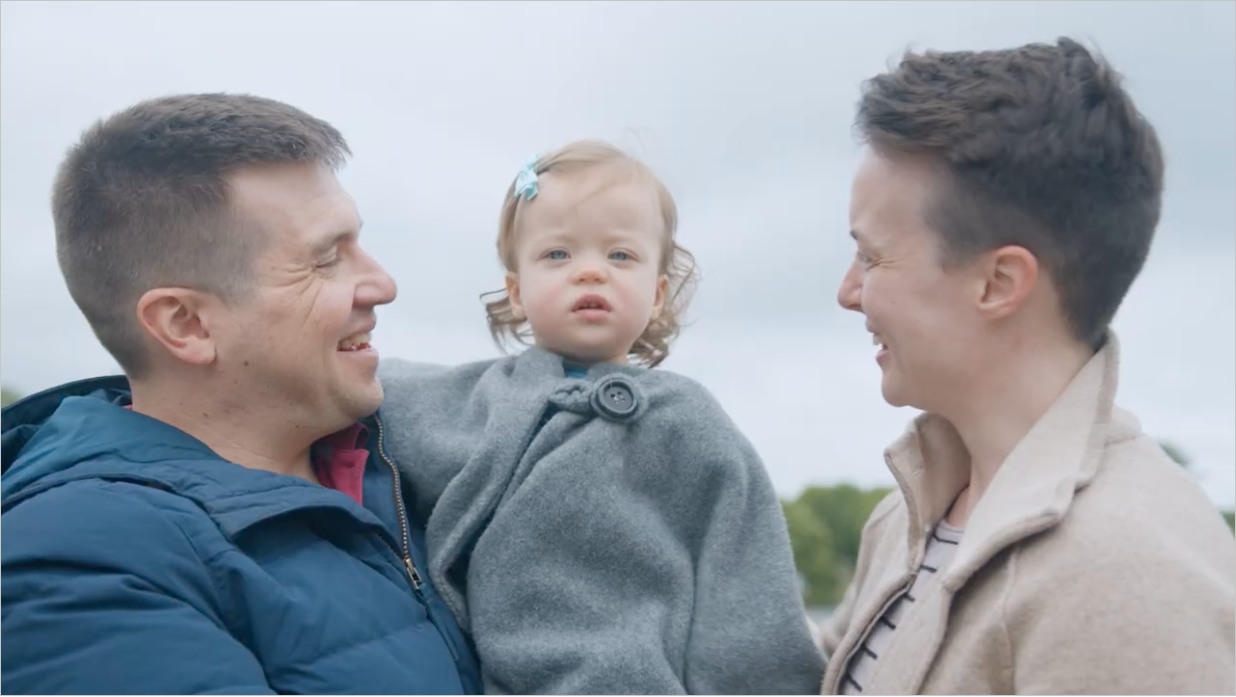
Life after seizure control: Supporting Ivy’s development and everyday needs
Being seizure-free has been an important milestone, but it has not eliminated Ivy’s epilepsy or other care needs. Emily says Ivy continues to have spikes on her EEG. She also receives ongoing support for global developmental delay, low muscle tone, and CVI, including services from a teacher for the visually impaired through Perkins School for the Blind.
Ivy receives physical, occupational, and speech therapy through Early Intervention, along with outpatient speech therapy and care from several specialists. At the time of the October 2026 interview, she was crawling, beginning to cruise along furniture, and feeding herself. Although she had not started babbling, Emily noticed that she was understanding more words.
Daily life requires coordination. Emily and Will both work full time, with a nanny and grandparents providing Ivy’s one-on-one care. The family is also preparing for her transition from Early Intervention to developmental preschool. The genetic answer has not removed uncertainty, but it has helped them find the people and resources to navigate it.
A clearer path forward
Within two months of Ivy’s first seizure, genome sequencing through Gene-STEPS and parental testing identified a GRIA2 variant that her clinicians considered responsible for her condition. The result connected the family with broader specialist care, community, and research, while also contributing to a more personalized treatment decision.
After hearing from families whose searches lasted years, Emily sees the pace of Ivy’s diagnosis differently: “For all of that to happen that quickly, it’s really stunning.” Published Gene-STEPS findings show why early testing is being studied: among the first 100 infants with new-onset epilepsy, rapid genome sequencing found a genetic diagnosis in 43, and the results were clinically useful for 42.[4] Not every child will receive a diagnosis or respond the same way to treatment, but Ivy’s story shows what can become possible when testing, specialist care, and research connections come together early.
Today, Emily and Will are supporting Ivy’s development, coordinating her care, and looking ahead to preschool while continuing to explore research opportunities. There are still unanswered questions, but the family now has a direction and a community.
How to explore genetic testing for epilepsy in your family
If you or a family member has epilepsy and you are still looking for answers about the cause, talk with your neurologist or another healthcare provider about whether genetic testing may be appropriate. They can review your medical and family history, discuss testing options, and order testing or refer you to a genetics specialist.
For children with epilepsy, GeneDx also offers an online path to testing through a virtual healthcare provider. Families provide their child’s medical history and insurance information online. If testing is appropriate, the provider orders the test, GeneDx sends a cheek-swab kit to the home, and the provider reviews the results and next steps with the family.
Before moving forward, ask about insurance coverage and potential out-of-pocket costs. Genetic testing does not always find an answer, and a result does not guarantee a change in treatment.
Learn more about genetic testing for epilepsy and how to get started with GeneDx.
Share your genetic diagnostic journey with GeneDx
Every family’s story can help others understand what genetic testing may make possible. If GeneDx testing helped bring clarity to your family’s health journey or informed your child’s care, we would love to hear from you.