
.png)









Genetic testing for cerebral palsy: Unlock deeper insights
Genetic testing using exome and genome sequencing can uncover underlying genetic causes of cerebral palsy, supporting more precise diagnosis and informed management decisions.

Up to one-third of cerebral palsy cases have a genetic cause¹⁻³
Every year, 10,000 children are diagnosed with cerebral palsy,4,5 yet for most, the cause remains unknown.6 Historically, birth-related issues, such as asphyxia and trauma, were thought to be the primary cause of cerebral palsy.
More recent research shows that genetics plays a meaningful role in many cases, while birth asphyxia accounts for less than 10% of cases.3 Identifying the underlying genetic cause can provide clarity and guide more informed care decisions.


Many patients with cerebral palsy have additional genetic conditions7,8
Cerebral palsy often appears alongside other neurodevelopmental and medical features. In fact:8
of patients with cerebral palsy also have intellectual disability.
of patients with cerebral palsy also have epilepsy.
of patients with cerebral palsy also have autism spectrum disorder.
Exome and genome reveal what other tests can miss
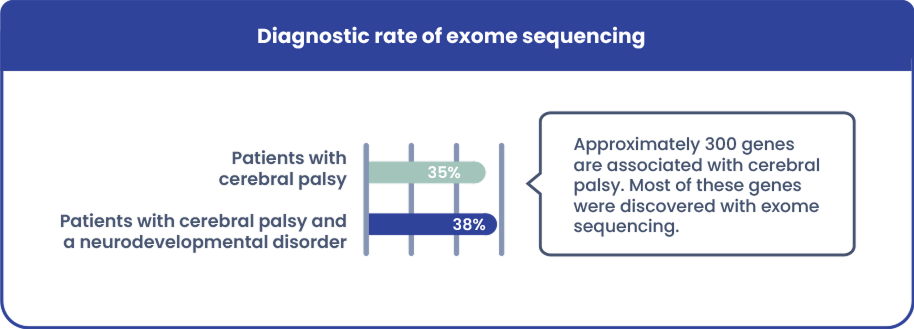
The diagnostic rate of exome sequencing is 4x greater than chromosomal microarray for cerebral palsy.1
of patients diagnosed via exome testing would not have received a diagnosis with a genetic panel.9
A genetic diagnosis supports more personalized care
Understanding the genetic cause of cerebral palsy can clarify prognosis and help clinicians tailor care to the patient’s needs.
A diagnosis can inform:12
- Medical management
- Surveillance
- Reproductive counseling
- Family testing
- Cost-efficient care planning
- Access to advocacy resources
- Access to therapies and services
- Access to clinical trials
Take action to find the cause
Whole exome sequencing and whole genome sequencing can uncover the root cause of a patient’s cerebral palsy and may also reveal a co-occurring condition.1 If you don’t test, you just don’t know.

Find answers with GeneDx
We can help you take a guideline-driven approach.



.svg)
Real families, real answers
Hear directly from parents and caregivers who turned to GeneDx for answers.
Helpful resources
GeneDx Infinity™
Infinity is powered by data from over 2.5 million tests–informed by nearly 1 million exomes and genomes and more than 7 million phenotypic datapoints – to help you uncover answers faster and fuel the discovery of life-changing treatments.
How to order
Ordering with GeneDx is easy, and our team supports you at every step. Visit our ordering portal to choose the right test and get started.
Support
Our team of clinical and genetic experts are here throughout the process—from education and guidance to results interpretation and next steps.
Help your patients find answers
We’re here to support every step.