




Key takeaways
- GeneDx trio exome sequencing identified two important findings for Olivia: a CSNK2A1 variant and aCOL7A1 variant, helping clarify key aspects of her health journey.
- Olivia’s clinicians used her genetic results, symptoms, and medical history to diagnose Okur Chung Neurodevelopmental Syndrome (OCNDS) and dystrophic epidermolysis bullosa (DEB).
- Trio testing showed that Olivia’s CSNK2A1 variant was de novo (not inherited from either parent), while the COL7A1 variant was inherited from Hilary.
- The CSNK2A1 variant led to an EEG, which revealed abnormal sleep-related brain activity and helped guide neurologic care.
- The inherited COL7A1 variant helped Hilary better understand her own symptoms and make practical changes that improved daily life.
Navigating the pediatric diagnostic odyssey: early developmental delays and unanswered questions
Hilary Eaton and her husband both work in biotechnology and are familiar with developing therapies for genetic disorders. Yet when their younger daughter, Olivia, began facing complex health challenges, they found themselves in the same exhausting search for answers that so many rare disease families go through. Even with their scientific backgrounds, navigating the maze of doctors, waiting rooms, and unanswered questions was overwhelming.
The concerns began early. When Olivia was born on March 30, 2019, she did not pass her newborn hearing screening. At first, her care team suspected it was a temporary issue caused by retained fluid in the ear canals from a very fast delivery. But follow-up hearing evaluations over the following months continued to raise questions.
By January 2020, a more comprehensive hearing assessment revealed that Olivia's hearing loss was more significant than initially thought. During the appointment, the audiologist also noticed that, at 9 months old, Olivia was not yet sitting independently, prompting further evaluation of her development.
The following month, Olivia received ear tubes and underwent an Early Intervention assessment. Specialists identified significant delays across gross motor, fine motor, and speech development. By her first birthday, Olivia still was not crawling or pulling herself up to stand.
Just days later, the COVID-19 pandemic brought in-person care to a halt. Like families everywhere, the Eatons suddenly had to transition physical, occupational, and speech therapy to Zoom, a significant challenge for a curious one-year-old who wanted to engage with the world around her.
As clinics gradually reopened later that year, Olivia's family continued searching for answers. During a visit with an orthopedic specialist, the doctor noticed that Olivia's ankles were unusually flexible, weak and unstable and asked whether anyone in the family was double-jointed. For the first time, a physician suggested that Ehlers-Danlos syndrome (EDS), a connective tissue disorder, might be worth investigating.
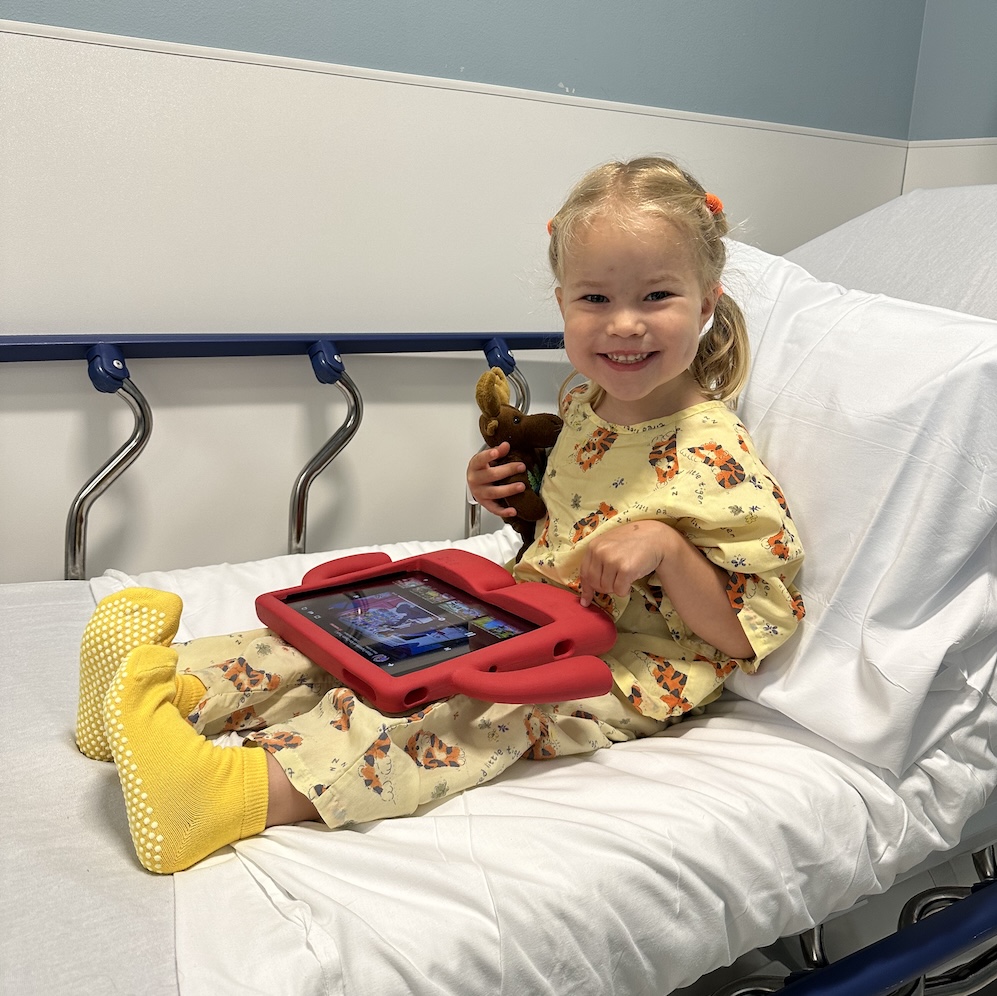
By her second birthday, Olivia still couldn't stand or walk independently, and traditional physical therapy had resulted in only limited progress. Then, in April 2021, she was fitted with custom ankle braces that provided the stability her joints had been missing. Within months, Olivia was proudly walking on her own, reaching a milestone her family had worked tirelessly toward.
It was a breakthrough, but it didn't explain why she had struggled in the first place. Her family was still searching for answers, and Olivia's journey was far from over.
The limits of targeted panels: exploring connective tissue disorders and hypermobile EDS
In September 2021, after waiting ten months for an opening, the family saw a pediatric genetics specialist who focuses on connective tissue conditions. Looking at Olivia’s unusually loose, flexible joints and hearing about the family’s health history, the doctor suspected hypermobile Ehlers-Danlos syndrome (hEDS). But the official checklist used to diagnose hEDS looks for physical signs and life events that a toddler simply hasn’t lived long enough to experience. To help connect the dots, the doctor suggested Hilary get evaluated first – and sure enough, after waiting for many months to see an adult specialist, Hilary received a clinical diagnosis of hEDS in April 2022.
Because there is no known genetic cause for hEDS, and because hEDS didn’t explain all of Olivia’s symptoms, doctors recommended that both mother and daughter take a targeted genetic test that checked 92 specific genes linked to various other connective tissue disorders that can present with hypermobility. Both results came back completely negative.
In this case, a negative result didn’t mean Olivia’s challenges had vanished or that she didn’t have a connective tissue disorder - it just meant the answer wasn’t among those 92 specific genes. The family hoped to run broader genomic sequencing to look deeper, but their insurance company denied coverage. Because Olivia was gaining ground with physical therapy and her symptoms were not considered an immediate emergency, insurance felt routine therapy was enough. Olivia kept moving forward, starting public preschool with ongoing therapy support.
Beyond common childhood illnesses: Identifying humoral immunodeficiency and B-Cell dysfunction
Once Olivia started preschool and kindergarten, a troubling pattern emerged. She caught cold after cold, but unlike many children, her respiratory illnesses often dragged on for three to five weeks. Nighttime coughing fits became so severe that she sometimes threw up, and across one year her family counted only 17 days when she was completely symptom-free. Olivia missed so much school that her family eventually received a truancy warning letter.
At first, doctors reassured the family that frequent illnesses were common as children returned to classrooms after the isolation of the pandemic. But Olivia’s symptoms went beyond typical school germs. She experienced prolonged respiratory infections, persistent skin infections, painful rashes, and spontaneous nosebleeds. By summer 2024, specialists had diagnosed asthma and prescribed treatments that helped calm her cough and control the bleeding, but her family was still left asking why her body struggled so much to fight common infections.
In late 2024, an allergy and immunology specialist ordered detailed bloodwork that revealed Olivia had almost no protective antibodies against illnesses she had already been vaccinated for. After a pneumonia booster produced little response, further testing showed many of her infection-fighting B cells were stuck in an immature stage and unable to protect her effectively. By early 2025, doctors confirmed an underlying immune deficiency: humoral immunodeficiency and B-Cell dysfunction. Olivia later began monthly IVIG infusions to help protect her from serious infections while her family continued searching for the root cause.
Direct-to-consumer genetic testing vs. accredited clinical sequencing: A critical difference
After first trying to understand Olivia’s hypermobility and connective tissue concerns, and then facing a new layer of questions around her immune deficiencies, Hilary and her husband felt they could not keep waiting for answers or being limited to targeted testing panels rather than comprehensive clinical sequencing, so they decided to tackle genetic testing on their own, given their scientific backgrounds. In early 2023, they paid out-of-pocket for at-home DNA sequencing kits from a third-party consumer service - well before they ever connected with clinical genomic sequencing through GeneDx.
The results arrived as massive data files that were nearly impossible to open or navigate without specialized software. They soon realized that having the raw data was very different from having actual medical answers. Hilary and Matt set up a folder called “Genome Detectives” and spent late nights combing through the data and creating a family spreadsheet, trying to see if they could spot any suspicious findings.

That hands-on search quickly exposed the real risks of relying on uninterpreted results from direct-to-consumer testing, which can have variable data quality. Early on, the couple had a terrifying scare when they spotted what looked like a dangerous genetic change linked to a severe, life-threatening immune disorder. They spent hours in sheer panic before Matt used his computational biology expertise to determine that the result was completely false — something the average customer would likely have no way of recognizing from the raw data alone. Since the test used a cheek swab, harmless mouth bacteria had contaminated the sample; neither the company’s human operators or automated software had properly filtered non-human DNA out before handing over the data, and their customer-facing tool then inaccurately labeled the bacterial DNA as a pathologic mutation in Olivia’s DNA.
The false alarm drove home an important lesson: raw files from a consumer kit cannot replace an accredited clinical laboratory. When Hilary also began using AI tools to help organize complicated symptoms and scan medical literature, she knew that technology also had to be used carefully.
“AI is a tool, not a doctor,” Hilary explains. “It can act as a thought partner - helping you organize messy records, spot patterns across different body systems, and prep the right questions before a doctor's visit. But it only works safely when you pair it with an accredited clinical lab, a geneticist, and an experienced medical team.”
The real turning point came in September 2025. While attending a conference on connective tissue disorders, Hilary watched a presentation that highlighted COL7A1, a gene tied to a rare skin-fragility condition called dystrophic epidermolysis bullosa (DEB). The gene sounded familiar. She checked her spreadsheet and realized that both she and Olivia carried a genetic change in that exact gene. Armed with that concrete finding, Hilary went straight back to Olivia’s doctors to request clinical-genetic testing.
The diagnostic turning point: How GeneDx trio exome testing found the root cause
In October 2025, the family received the results of Olivia’s GeneDx trio exome test. By testing Olivia alongside both of her parents, GeneDx was able to compare her DNA directly with theirs, showing which diagnostic findings were inherited and which were unique to Olivia.
The test uncovered two important genetic changes that were considered potentially connected to Olivia's challenges: it confirmed the change in the COL7A1 gene, but also found an unexpected change in the CSNK2A1 gene. GeneDx identified these genetic variants, and Olivia’s medical team looked at them in the context of her full clinical picture - her symptoms, medical history, physical exams, and immune lab work - to officially diagnose her with CSNK2A1-related Okur-Chung neurodevelopmental syndrome (OCNDS) and COL7A1-related dystrophic epidermolysis bullosa (DEB).
According to Simons Searchlight, the CSNK2A1 gene helps brain cells develop and work properly. Changes in this gene can contribute to developmental delay, meaning a child takes longer to reach milestones such as sitting, walking, or talking. When delays affect several areas of development, this is called global developmental delay. Many people with OCNDS also have intellectual disability, which refers to differences in intellectual functioning and adaptive skills. These terms describe different aspects of development, and each person’s abilities and support needs are different.
Testing the family as a trio gave Olivia’s doctors crucial context they could not have gotten by looking at Olivia alone. The CSNK2A1 change started in Olivia — it was “de novo”, meaning it was not present in either parent — and comparing her result with both parents helped doctors feel more confident that this genetic change was the reason for many of her symptoms, which neither parent had. That parental context is one reason trio testing can help clarify whether genetic changes may be related to a patient’s condition and improve the chance of reaching a diagnosis. Meanwhile, the COL7A1 change was inherited from her mother, Hilary.
These results immediately began solving mysteries that had baffled specialists for years. When a pediatric immunogenetics specialist reviewed the findings, she uncovered a clear biological link between Olivia's CSNK2A1 variant and her frequent, severe infections. The CSNK2A1 gene plays a critical role in helping infection-fighting B cells mature and produce protective antibodies. Because this process was disrupted in Olivia, many of her immune cells were left stuck in an early, immature state, explaining why she couldn't fight off common bugs.
With one comprehensive test, the family finally had answers that connected the dots between Olivia’s developmental delays, her fragile skin, and the complex immune vulnerabilities she had battled since infancy.
Uncovering abnormal brain activity: How an EEG and genetic findings guided neurologic care
Because of Olivia’s OCNDS diagnosis, Hilary and Matt knew to keep a close eye out for neurological concerns. So when Olivia suddenly began having rapid muscle twitches and tics in her neck, shoulders, chin, and mouth in December 2025, they immediately brought her to a pediatric neurologist and pushed for an electroencephalogram (EEG).
The movements were happening multiple times every minute. Although the neurologist initially suspected Tourette syndrome rather than epilepsy, because Olivia had never had obvious, full-body convulsive seizures, Hilary trusted her instincts and asked for the EEG — even if only to have baseline data on file for the future.
In April 2026, Olivia completed a two-hour EEG. Just thirty minutes after the test finished, the neurologist called Hilary with urgency: the scan revealed frequent abnormal brain activity associated with epilepsy, and Olivia needed to start anti-seizure medication immediately.
The findings helped explain symptoms the family had been struggling to understand. Although Olivia had not experienced the kind of obvious, full-body seizures many people associate with epilepsy, the amount of abnormal brain activity seen on the EEG placed her at a significantly increased risk for seizures and met clinical criteria for an epilepsy diagnosis.
Unexpectedly, the EEG results also solved a six-year mystery: why Olivia had never been able to sleep through the night. Her chronic sleep struggles weren't behavioral or a phase she would simply outgrow. Abnormal brain activity had been occurring while she slept, repeatedly disrupting her rest.
Once Olivia started medication to manage the abnormal brain activity, the change was dramatic. Her sudden-onset motor tics decreased dramatically, which was the improvement her family had hoped to see. Then came an unexpected breakthrough: for the first time in her life, Olivia began sleeping peacefully through the night. With her nighttime brain activity under control, Olivia’s daytime focus and energy completely transformed, and her exhausted parents finally got a full, uninterrupted night of rest.
A targeted care plan for fragile skin and dystrophic epidermolysis bullosa (DEB)
Confirming the inherited COL7A1 genetic change also completely transformed how doctors cared for Olivia’s skin. While dystrophic epidermolysis bullosa (DEB) is best known for causing painful blisters, it affects every person differently depending on their specific genetic change. In Olivia, it showed up as unusually fragile skin that tore easily, developed stubborn rashes, and took a frustratingly long time to heal.
In the summer of 2026, Olivia saw a pediatric dermatologist who specializes in rare skin-fragility disorders. Having an exact genetic diagnosis allowed her medical team to evaluate her past skin tears and slow-healing wounds in a completely new light.
Her doctors prescribed a specialized prescription gel to speed up wound healing and established a gentle, protective daily skin-care routine and custom band-aids that don’t rip her skin off. Instead of just reacting to scrapes and tears after they happened, Olivia’s family and care team now had a clear roadmap to protect her delicate skin, prevent recurring breakdown, and stop long-term tissue damage before it could start.
An unexpected breakthrough for mom: How GeneDx trio testing transformed Hilary’s health
The most surprising part of Olivia’s diagnostic odyssey was that the test ordered to help her also gave Hilary long-awaited answers.
Because GeneDx trio exome testing looked at Olivia and both parents together, it showed that Olivia’s COL7A1 genetic change had been inherited from Hilary — giving the family the clinical confirmation they had been searching for.
For years, Hilary had lived with unexplained fragile skin, episodes of blisters, and toenails that detached after long days in professional high-heeled shoes. With the genetic finding in hand, a DEB specialist could finally connect those symptoms to a clear cause and recommend simple changes to reduce her symptoms and positively impact her skin and nail health, and overall daily life.
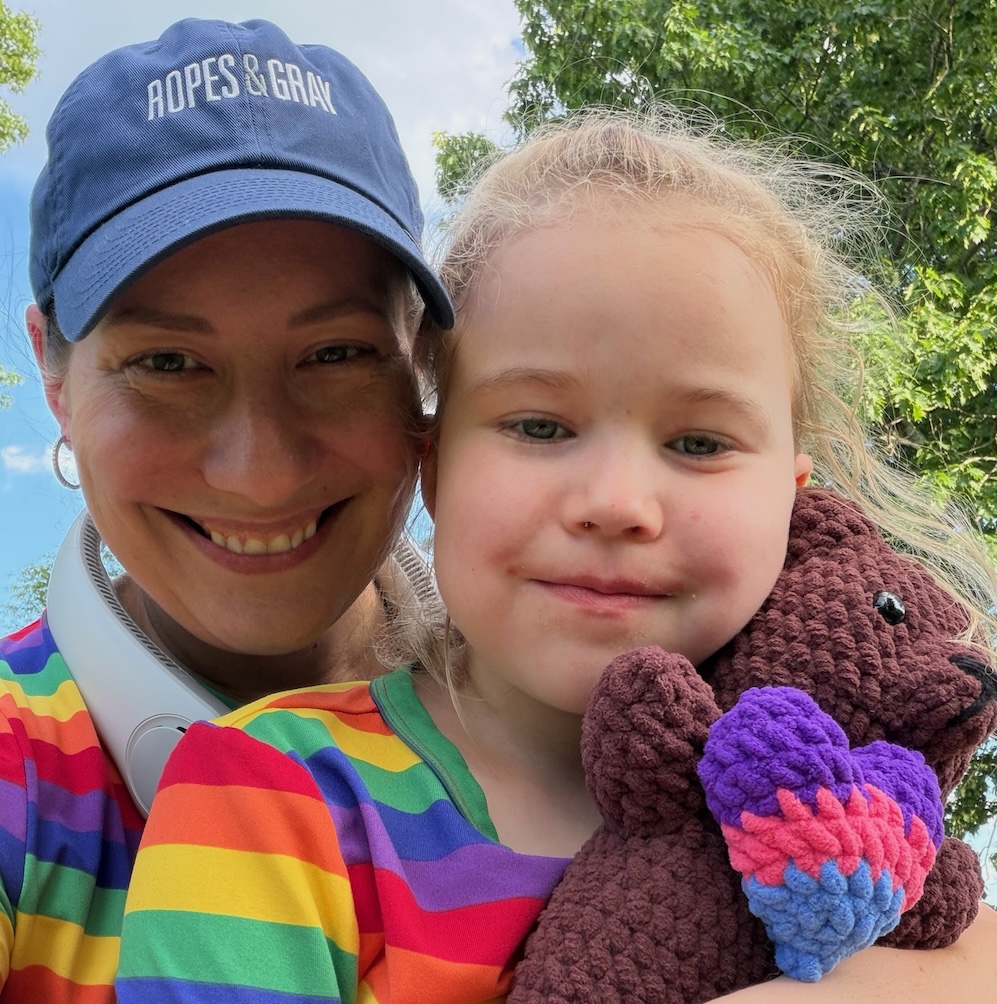
The results helped Hilary understand that her symptoms were not random or something she simply had to live with. The same testing that helped guide Olivia’s care also helped Hilary get answers for her own health, turning years of uncertainty into a clearer path forward.
Life after an OCNDS diagnosis: Finding support, specialists, and the CSNK2A1 Foundation
Receiving a diagnosis can bring enormous relief - finally, there is a name for what a family has been experiencing. But it is also the beginning of a new chapter. Rare conditions like CSNK2A1-related Okur-Chung neurodevelopmental syndrome (OCNDS) can affect different parts of a child’s health, which may mean coordinating care with several doctors, managing appointments, and learning what to watch for over time.
For Hilary’s family, the genetic answer helped turn years of scattered questions into more focused conversations with Olivia’s care team. Still, a test result is only one piece of the puzzle. Families often need help understanding what the results mean, asking the right questions, and sharing information among their child’s doctors, therapists, school team, and other support providers.
For families newly navigating an OCNDS diagnosis, the CSNK2A1 Foundation offers practical support and a place to connect. The foundation provides educational resources, directories to help families find knowledgeable physicians, welcome materials for newly diagnosed families, and opportunities to join patient registries. It also supports research to help improve understanding of OCNDS and move potential treatments forward.
From years of searching to genetic answers: How GeneDx testing helped one family move forward
Olivia’s diagnostic journey moved through years of appointments, targeted testing, and unanswered questions: early hearing concerns, developmental delays, prolonged infections, immune deficiency, fragile skin, and sleep-related neurologic issues.
GeneDx trio exome sequencing finally helped connect those pieces. The results gave Olivia’s doctors genetic insight to support her care plan, including monthly immune infusions, anti-seizure medication, and skin protection strategies tied to her DEB diagnosis. The same test also explained symptoms Hilary had lived with for years.
For Hilary, learning that Olivia inherited one of the genetic changes from her initially brought guilt and self-blame. But the answer also gave their family something they had been missing: a clearer way to understand what was happening and how to help.
“I realized that everything I learned by managing these symptoms myself could be passed along to protect Olivia,” Hilary says. “She will not have to endure the same painful trial and error.”
“Information is power,” Hilary says. “When you have the right genetic answers, you take your agency back.”
Share Your Genetic Diagnostic Journey With GeneDx
Every family’s story has the power to bring hope and help others find answers sooner. When parents and doctors hear real experiences like Olivia and Hilary’s, it helps them spot rare conditions faster and reminds families that they aren’t alone in this journey.
If GeneDx genetic testing helped bring clarity to your family’s health journey or changed the way you care for your child, we’d love to hear from you. Share your story with GeneDx and help guide another family searching for answers. (LINK)