








Key takeaways:
- Early clues did not lead to an immediate diagnosis. An eye examination and family history raised concerns about Fabry disease when Melissa was 14, but she was told she was only a carrier.
- Symptoms affected daily life and military service. Burning hand pain, digestive problems, and heat intolerance persisted while Melissa searched for explanations.
- Patient community helped her pursue answers. A Fabry disease group helped Melissa learn that women could be affected and connected her with information about a specialist. Testing confirmed her diagnosis, and further evaluation informed treatment.
- Her diagnosis informed more than treatment. It helped guide military medical retirement and family testing decisions, and inspired her advocacy for women and military members.
An unexpected clue: How an eye examination raised questions about Fabry disease
Melissa was 14 when a routine eye appointment brought an unfamiliar condition into focus.
The doctor repeatedly asked whether she took any medications. When Melissa said no, he explained that he had noticed an unusual pattern on her eyes. He brought her mother into the room and consulted a medical textbook before suggesting that Melissa might have a rare genetic condition called Fabry disease.
Fabry disease is a rare inherited condition in which the body can’t make enough of an enzyme needed to break down a substance called Gb3. Over time, those molecules build up in cells and can affect organs like the kidneys, heart, and nervous system.
Her mother recognized the name: Melissa’s biological father had it.
For Melissa, who had not grown up with her father, the conversation was a surprise. The eye doctor advised her mother to have Melissa tested, and the family was referred to a geneticist. This was 1998, and at the time, women were understood to be only carriers of Fabry disease.
But the explanation she received at the time did not account for what she was experiencing. Melissa recalls the geneticist saying that she was just a carrier, that there was nothing to do, and that she would probably live a normal life. Because women were believed to be carriers without symptoms, no further testing was done at that point.
Melissa still did not have an official diagnosis, and the carrier message shaped how she and her family understood her health for years to come.
For information about testing, explore GeneDx’s Fabry disease genetic testing program for eligible patients with your healthcare provider.

Living with unexplained symptoms: Burning pain, digestive problems, and heat intolerance
Later that same year, Melissa experienced an episode she still remembers vividly.
After having her hands dipped in hot wax during a nail appointment before homecoming, she developed intense burning pain. The discomfort continued at a cheerleading game in the Florida heat and became so severe that she was in tears.
Her mother tried cooling Melissa’s hands with ice and blowing on them. They waited for the pain to pass, but Melissa remembers the episode lasting about a day.
What Melissa did not know then was that burning pain in the hands is a symptom of Fabry disease. Because she had been told she was only a carrier, the family did not connect the episode to the condition.
Even then, the earlier reassurance remained powerful. If she was only a carrier, she assumed there must be another explanation.
As she grew older, more symptoms appeared. She sometimes passed out when she was ill. Digestive problems became increasingly disruptive, leaving her urgently searching for a bathroom when she was away from home. Heat made it difficult to stay comfortable and keep up with physical activity.
Each symptom seemed to come with a separate explanation: sensitivity to illness, something she had eaten, or simply not being naturally athletic.
Without a clear understanding of how those experiences might fit together, Melissa continued trying to manage them on her own.
Her prolonged search reflects a broader challenge in rare disease care. The average time to an accurate rare disease diagnosis is approximately four to five years, and in some populations it may take up to a decade.[1] For Melissa, despite early clues and a known family history, there wasn’t enough known about females with Fabry disease at the time to recognize it as the most likely cause of her symptoms.
Serving through symptoms: The pressure to keep up in the Air Force
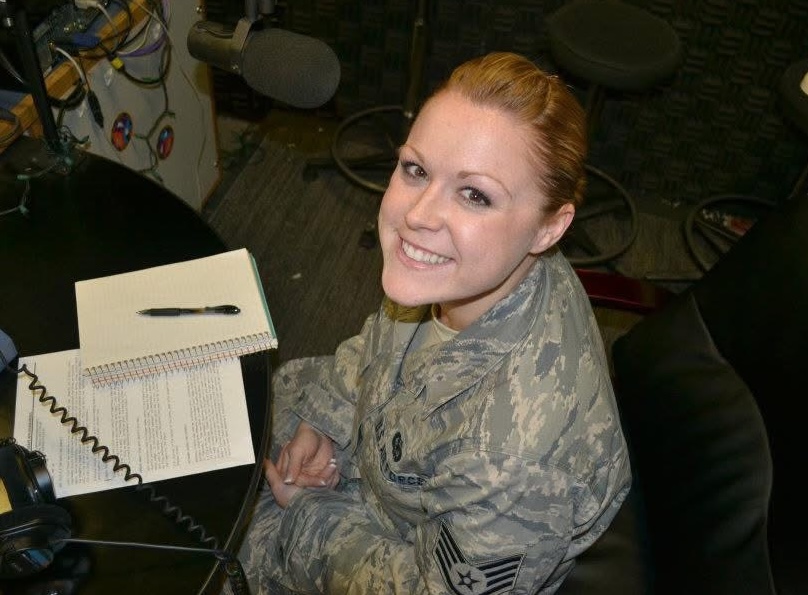
Melissa enlisted in the Air Force in 2007 and built a career as a broadcaster. Her career included deployments.
She was determined to succeed. During basic training in Texas, she pushed through the heat and focused on graduating. Later, she earned awards for her broadcasting work and advanced in her career.
But physical fitness testing became increasingly difficult.
Running was a particular challenge. Melissa overheated and struggled to meet the required times. She was told to work out more, adjust her pacing, or change how she breathed.
She took those explanations seriously, even when they did not match the effort she knew she was making.
“I’m trying my hardest,” she remembers thinking.
Failing a fitness test was not simply disappointing. It raised concerns about her future in the military, where she had hoped to serve for 20 years. Melissa worried about being seen as weak, letting others down, or losing the career she had worked hard to build.
For a long time, her response was to push harder and say less about how she felt.

The power of patient community: A Facebook post that changed her direction
While stationed in Alabama, Melissa came across a conversation in a Fabry disease Facebook group that challenged what she had been told as a teenager.
Women were discussing their own symptoms, diagnoses, and treatment. They were not describing themselves as unaffected carriers.
For Melissa, the conversation offered a different way to understand her health.
“This is real,” she remembers realizing.
Another group member shared information about a physician in Alabama who cared for people with Fabry disease. Finding a specialist in the same state made seeking care feel possible.
Melissa wrote down his information, researched the clinic, and printed educational materials to bring to her primary care appointment.
The community had given her more than reassurance. It had helped her identify a concrete next step.
“It’s like this Facebook post changed everything,” she says.
“It’s like this Facebook post changed everything.”
Genetic testing confirms Melissa’s Fabry disease diagnosis
Melissa asked her primary care clinician for a referral to pursue an official diagnosis.
Her request initially met uncertainty. She recalls questions about whether she could have Fabry disease because only her father was affected. But because Fabry is an X-linked condition, her father’s diagnosis was an important part of her family history and a reason to pursue genetic testing.
Melissa persisted.
“I still want to get tested,” she remembers saying.
She received a referral to a genetics clinic in Birmingham. Although the clinic primarily saw children, the team listened to her history and agreed to test her. The testing resulted in an official diagnosis of Fabry disease.
She then met with the specialist for further evaluation.
After years of symptoms being explained away, Melissa finally had confirmation that supported what she had been experiencing. The next step was understanding how the condition was affecting her body and what care she needed.
From diagnosis to treatment: Understanding kidney involvement and starting care
Melissa’s specialist ordered additional testing to assess her health, including her kidney function. He also recommended a kidney biopsy to better understand whether Fabry disease was affecting her kidneys.
Melissa recalls that the biopsy showed changes at the cellular level.
The findings helped guide the decision to begin enzyme replacement therapy (ERT), a treatment for Fabry disease that replaces the enzyme the body is missing or does not make in sufficient amounts. By providing the missing enzyme, ERT helps the body break down Gb3that builds up in cells over time and cause damage. Melissa continues to receive ERT as part of her ongoing care.
For Melissa, the diagnosis was not simply a name for her symptoms. It led to a specialist evaluation and an ongoing treatment plan.
Research across rare diseases also illustrates how genetic answers can inform care. A meta-analysis of pediatric and adult patients with rare diseases found changes in medical management in up to 60% of individuals with a diagnosis identified through exome or genome.[2] This was not Melissa’s specific testing nor is it specific to Fabry disease.
At first, she received infusions in a hospital setting. Over time, she asked whether treatment could be provided at home. Her doctor helped secure approval, and she now receives infusions from an in-home nurse.
Because she works from home, the arrangement makes treatment easier to fit into daily life.
Her symptoms have not disappeared. She continues to manage fatigue, digestive difficulties, temperature sensitivity, and episodes of nerve pain. But she now has condition-specific care —and a clearer understanding of why her body needs support.

How Fabry disease informed Melissa’s military medical retirement
Receiving a diagnosis also changed the direction of Melissa’s Air Force career.
She had received orders to a new assignment she was excited about. But her diagnosis and ongoing treatment needs triggered a medical review to determine whether she could continue serving.
The uncertainty was frightening. She did not know how quickly her career might end or what would happen to her access to care.
Melissa shared those fears with her specialist, who agreed to describe her Fabry disease diagnosis and long-term care needs for the review. That documentation was key.
Most medical reviews involve conditions where service members can be evaluated and then returned to duty. Melissa’s situation was different. Fabry disease is progressive, and most individuals are on ERT for the rest of their lives.
Her specialist had previously prepared a medical package for another service member with Fabry disease. He wrote hers to help the review board understand that the condition is lifelong and progressive, that she needed ongoing care, and what he advised the board to do.
Because her Fabry disease diagnosis was recorded in the review, it became the key to Melissa being medically retired with benefits, including continued TRICARE coverage and a pension. Without a confirmed diagnosis, she might not have had access to those benefits, which have been life-changing for her and her family.
The difference was significant. Medical retirement meant Melissa would keep TRICARE coverage for treatment that, she recalls, cost about $22,500 per infusion at the time, every two weeks, for the rest of her life.
For her, that outcome provided stability as she adjusted to life after military service and continued treatment.
Her experience also showed her how complicated the process could be. She now shares what she learned with other military members and veterans, helping them identify questions to ask and people who may be able to assist. She recognizes that their circumstances and outcomes may differ from her own.
How her diagnosis informed testing for her son
After leaving the military, Melissa became a mother.
Knowing her diagnosis raised questions about her son’s health. Rather than wait for symptoms or assume he was unaffected, she arranged testing after he was born.
Melissa recalls the relief of learning that he did not have Fabry disease.
For her family, understanding her own condition had made it possible to ask a specific question about her child’s health and pursue an answer.
That experience became another example of what a diagnosis could change: not only her own care, but also the information available to her family.

Life after diagnosis: Learning that her symptoms—and her needs—matter
Some of the most meaningful changes in Melissa’s life have involved how she treats herself.
For years, she had associated rest with laziness and physical limitations with not trying hard enough. Understanding her condition helped her begin questioning those beliefs.
She learned to acknowledge difficult days, ask for what she needed, and decline activities that would leave her feeling unwell.
“I had to train myself like, hey, it’s okay to feel sick,” she says.
Today, practical adjustments help her participate in family life. At her son’s outdoor sporting events, her husband helps her manage temperature changes with shade, a misting fan, or a heated chair, depending on the weather.
His support helps her make room for both her health needs and the experiences she wants to share with her family.
A diagnosis did not remove every challenge. But it helped Melissa stop interpreting those challenges as personal failures.
Turning experience into advocacy: Helping women and military members find a path forward
Melissa now brings her experience to others. Invited by the Fabry Support and Information Group (FSIG), she spoke on a panel at the group’s Fabry Women’s Summit, where she shared her story and connected with others navigating the condition.
She is especially motivated to help women who are still hearing the same message she heard as a teenager: that they are only carriers, even when they are experiencing symptoms.
She also wants military members to feel able to raise health concerns without viewing themselves as weak or as a burden to others.
Her advocacy draws on the turning points in her own journey: a patient community that shared information, a referral she persisted in requesting, and a specialist who helped explain both her condition and her care needs.
Looking back, Melissa describes that community connection as a catalyst that changed the course of her life.
Her story shows how finding answers can lead to action—not only through treatment, but through family health decisions, practical support, and the confidence to take one’s own symptoms seriously.

Does someone in your family have unexplained symptoms?
Does someone in your family have unexplained symptoms that may benefit from genetic testing? Learn more about accessing genetic testing for your family member.
Share your genetic diagnostic journey with GeneDx
Every person’s story has the power to help someone else recognize a familiar experience, ask a new question, or take the next step toward answers.
Stories like Melissa’s highlight why listening to symptoms, understanding family history, and connecting with knowledgeable care teams matter.
If genetic testing helped bring clarity to your health journey or changed the way you care for yourself or your family, consider sharing your story with GeneDx to help others who are still searching for answers.