.svg)







Key Takeaways
- A negative or limited genetic test does not always end the diagnostic journey—broader testing, such as exome sequencing, may uncover answers that earlier testing missed.
- Cerebral palsy is a clinical diagnosis, but genetic testing can identify an underlying genetic cause for some individuals.
- A genetic diagnosis can connect families with specialized care, research opportunities, and more personalized long-term management.
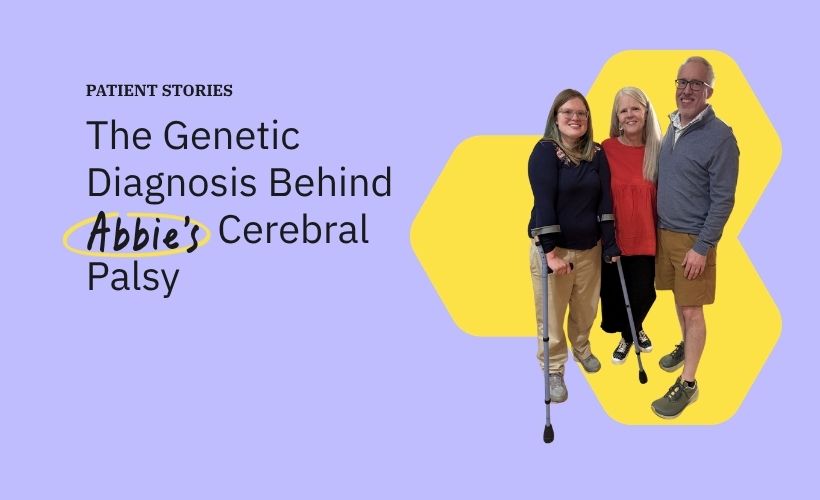
- For Abbie and her family, a diagnosis of SPG26 finally brought clarity after years of uncertainty.
When Early Signs Didn’t Add Up
Mike and Evelyn Ribadeneyra welcomed their first daughter, Abbie, in February 2000. “She was beautiful and perfect in every way,” Mike recalls.

In Abbie’s first couple of years, she was a little late reaching milestone, but nothing seemed dramatically out of range. The first clear warning sign came around age four, when Abbie’s preschool teacher noticed she struggled to keep up physically—especially going upstairs.
A Cerebral Palsy Label That Didn’t Fit
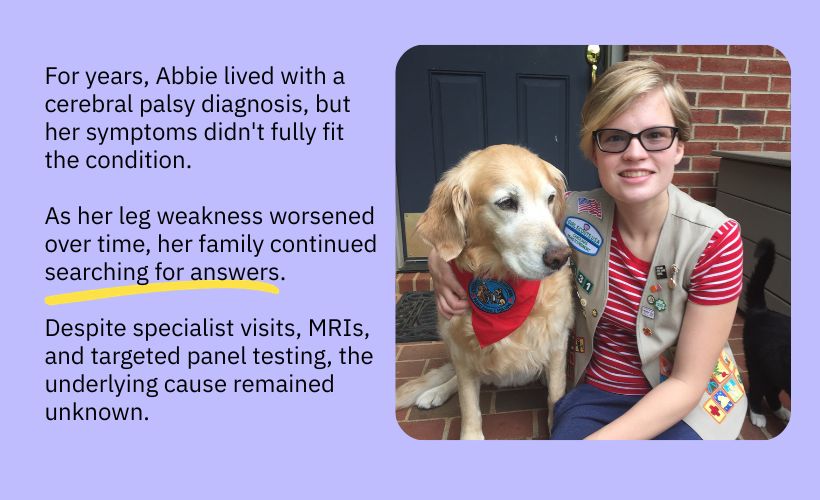
Mike and Evelyn pressed for evaluations. Pediatric neurologists could tell something was wrong, but no one could identify the cause. For years, Abbie carried a clinical diagnosis of cerebral palsy (CP).
But the family kept seeing something that didn’t match what they understood about CP.
“Cerebral palsy is usually diagnosed at birth…and limitations don’t progress,” Mike says. “But Abbie’s weakness in her legs was getting gradually worse.”
Over the next decade, the family saw multiple specialists, underwent brain MRIs, and pursued the genetic testing available at the time, including targeted gene panels that examined only a limited number of genes. Although Abbie continued to carry a clinical diagnosis of CP, the underlying cause remained unknown.
More Than Mobility: Other Challenges Along the Way
As Abbie grew up, the family learned they were navigating more than progressive leg weakness. Abbie also faced:
- learning differences, including dyslexia and ADD
- an anxiety disorder
- muscle tightness and contractures
Abbie required orthopedic intervention, including Achilles tendon lengthening surgery, to help address contractures affecting her mobility.
The Turning Point: Exome Sequencing Opens New Answers
After graduating from high school, Abbie enrolled in the Threshold program at Lesley University in Cambridge, Massachusetts. where she would start building her future of working with young children. It was at this program designed for young adults with disabilities or learning differences, where Abbie’s rehabilitation care led to a referral to a specialty clinic at Boston Children’s Hospital.
In February 2020—during a visit when Mike and Evelyn were in Boston for Abbie’s birthday—Abbie had an appointment, and her parents attended with her. A neurologist shared that a colleague was launching a genetic study focused on genetic causes in people diagnosed with cerebral palsy and invited the family to participate. Unlike the less comprehensive panel testing Abbie had undergone years earlier, the study used exome sequencing, a more comprehensive test designed to identify genetic changes across thousands of genes.
All three provided DNA samples. They didn't know what to expect, but they all agreed to consent to further genetic testing to hopefully find some clarity.
A Long-Awaited Genetic Answer: SPG26
The call finally came: the team had results.
Because Abbie’s testing was completed as part of a research study, the family waited about a year to receive her results. Today, advances in genetic testing mean that exome sequencing results may be available in as little as three to four weeks—helping families get answers and take the next steps much sooner.
In spring 2021, the family reviewed the results over Zoom. Exome sequencing revealed two genetic variants in the B4GALNT1 gene, confirming a diagnosis of hereditary spastic paraplegia type 26 (SPG26) as the cause of Abbie’s symptoms.
“We were thankful to have a diagnosis… and an explanation,” Mike says.
The diagnosis also helped the family understand that Abbie’s anxiety and learning differences fit within a single underlying condition.
“It put everything together for us,” Mike says.
What Changed After a Genetic Diagnosis
For Mike and Evelyn, knowing the genetic cause, gave them a clearer path forward.
A diagnosis meant:
- An explanation that finally fits Abbie’s experience, including why her symptoms were progressive.
- A roadmap for the future, giving them the confidence to ask informed questions, advocate for Abbie, and better anticipate what to monitor over time.
- The ability to connect with specialists focused on hereditary spastic paraplegia
- The opportunity to explore research and future clinical trials with a confirmed genetic diagnosis
A diagnosis doesn’t change medical care, it changes how families process the past and look towards the future. While Mike and Evelyn experienced the parental guilt that many families feel when an inherited condition is identified, they also found a renewed sense of hope. Opening doors to future research that could one day improve the lives of others with SPG26.
Life Today
Today, Abbie is a thriving young adult living in North Carolina, pursuing her passions for working with children at a local preschool.
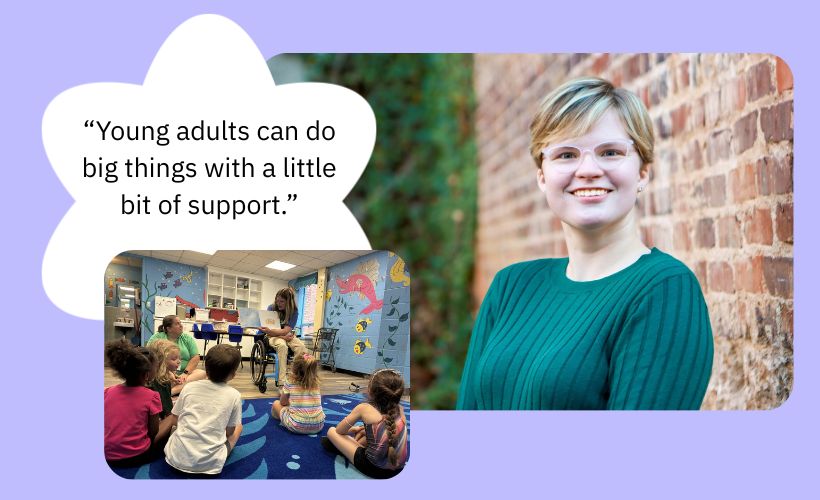
While SPG26 continues to shape her daily life, the right supports allow her to remain active and engaged in the things she loves.
Abbie’s daily supports include:
- ankle-foot orthotics (AFOs)although wearing them consistently can sometimes be challenging
- forearm crutches for short distances
- a wheelchair or motorized scooter for longer distances
- ongoing physical therapy to help maintain strength and mobility
- medication and mental health support to help manage anxiety
- transportation planning, as Abbie does not drive and relies on options like public transit and ride services)
Beyond her medical supports, Abbie has also found a strong sense of community through a local church program for young adults with special needs, where she has built meaningful friendships and connections.
“Young adults like this just sort of need a little push and a little bit of confidence,” Mike says. “They can do big things with a little bit of support.”
From Diagnosis to Action: Moving Research Forward
Abbie’s condition has been described as slowly progressive, but Mike and Evelyn are watching change over time—and they don’t want to wait.
“We can’t reverse the damage that Abbie has,” Mike says. “But we think we can keep it from progressing.”
Following Abbie's genetic diagnosis, Mike and Evelyn launched Cure SPG26 to bring together families, researchers, and clinicians working toward a common goal. Through the organization, they are raising awareness, building a community for families affected by SPG26, and advancing research that could one day lead to treatments for this ultra-rare condition. Watch more from CNBC Cures on this story.
Why Comprehensive Genetic Testing Matters for Cerebral Palsy
Abbie's journey highlights an important lesson: a previous panel test doesn't always mean the search for answers is over. As genomic technology advances and exome testing become more widely accessible, families who previously had negative or inconclusive results may benefit from discussing exome testing with their clinicians.
Cerebral palsy is one of the most common motor disabilities diagnosed in childhood. 1
Because research suggests that up to one-third of cerebral palsy cases may have a genetic cause, exome sequencing should be considered an important next step.2,3,4
Learn more about genetic testing for Cerebral Palsy.
Symptoms That May Warrant Genetic Testing
In Abbie’s journey, several features prompted her family to keep pushing for answers:
- delayed milestones and difficulty keeping up with peers
- difficulty going upstairs and progressive leg weakness
- contractures and orthopedic complications (including Achilles tendon lengthening)
- learning differences (including dyslexia and ADD)
- anxiety
- increasing need for mobility supports (crutches, wheelchair/scooter)
Wondering If Exome Testing Is Right for Your Child?
Comprehensive genetic testing such as exome sequencing can help identify genetic causes of developmental delays, neurological symptoms, and other unexplained conditions. The first step is speaking with your child’s doctor.