.png)







Key takeaways
- Up to one-third of children diagnosed with cerebral palsy may have an underlying genetic condition.
- Genetic testing can provide answers when symptoms don’t fully align with a known cause, such as birth injury.
- A genetic diagnosis can guide medical monitoring, reveal additional health risks, and inform care for the entire family.
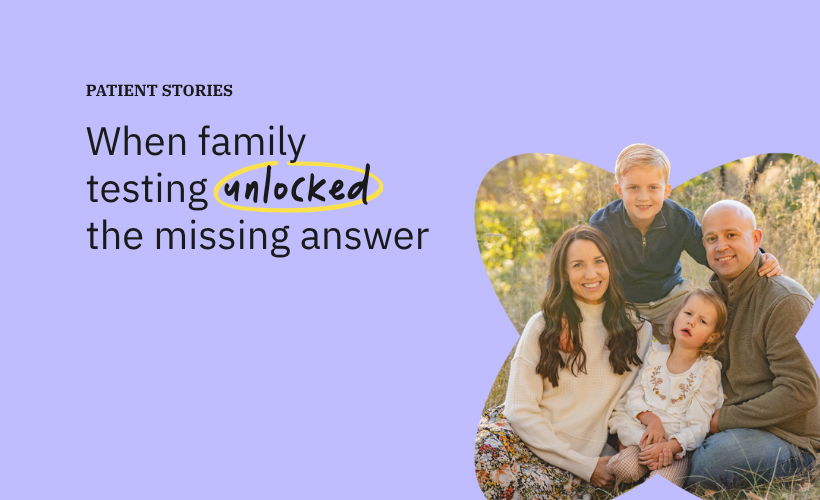
- For Rosie’s family, testing provided clarity, reduced guilt, and uncovered critical health information for multiple family members.
When developmental milestones were missed
Rachel’s pregnancy with her daughter, Rosie, reached full term without complication—until she went into labor.
What began as a routine delivery quickly turned into an emergency. Nurses became concerned as Rosie’s heart rate repeatedly dropped. After hours of monitoring, Rachel’s care team performed an emergency C-section. Rosie was born blue and required immediate resuscitation.
Doctors later identified a short umbilical cord as the likely cause of the birth injury, which led to a diagnosis of hypoxic-ischemic encephalopathy (HIE). Rosie spent 30 days in the NICU, undergoing cooling therapy, experiencing seizures, and requiring a feeding tube.
“They told us there would be developmental delays,” Rachel recalls.
At the time, that explanation made sense. Rachel and her husband focused on helping Rosie recover and grow, while also raising their older son, Wesley (Wes), whose development had been typical.
But as Rosie grew, her delays began to feel different than expected. She crawled at age one by dragging her left leg. By age two, she was not yet talking, and her fine motor skills were significantly delayed.
Even with a known birth injury, Rachel began to wonder if there was more to Rosie’s story.
Looking beyond a cerebral palsy diagnosis
A physical therapist first suggested the possibility of cerebral palsy. Soon after, a neurologist diagnosed Rosie with spastic quadriplegic cerebral palsy (CP).
Rachel followed the recommended path—therapy, specialist visits, and ongoing monitoring—but she kept searching for deeper answers.
When Rosie was four, she was referred to Dr. Bhooma Aravamuthan, a Pediatric and Developmental Neurologist at St. Louis Children’s Hospital.
That visit marked a turning point.
Dr. Aravamuthan explained that while CP is often linked to birth injury, some children may have CP plus an underlying genetic condition. In Rosie’s case, there were clinical clues that warranted further investigation into the potential genetic cause of her CP.
The significance of hearing loss
One of the most important signals came from Rosie’s hearing.
She had hearing loss in both ears, which raised concern for a possible genetic explanation. In addition, her imaging told an unexpected story.
When Rosie underwent an MRI at 10-days-old, she showed bright spots—areas consistent with inflammation or injury. However, her follow-up MRI at six months did not show the expected scarring typically seen in children with CP due to birth injury.
That discrepancy stood out.
For Dr. Aravamuthan, the combination of bilateral hearing loss, CP symptoms, and a lack of expected brain scarring on follow-up imaging suggested there could be an underlying genetic condition contributing to Rosie’s presentation.
Although Rosie had feeding challenges early in life and required a feeding tube in the NICU, those issues resolved by 11 months of age and had not been considered a primary indicator of a genetic condition.
With these factors in mind, Dr. Aravamuthan recommended comprehensive genetic testing.
The fight for access and answers
For Rachel, getting that testing approved was anything but straightforward.
Her insurance provider, Anthem Blue Cross, denied the request.
At the same time, Rachel was navigating the complex process of securing a Medicaid waiver for Rosie—an effort that took roughly a year and a half.
“I have some passionate, negative feelings about insurance companies and the healthcare system,” Rachel says. “We were victims of surprise billing after Rosie’s NICU stay. One of the biggest fights of our lives was getting her on Medicaid. I’m just happy our persistence paid off.”
Once the waiver was approved, Rachel was able to move forward with testing through GeneDx.
“I’m also so thankful to GeneDx for making the process so easy once we were through the fight,” she says.
The moment everything changed
Rosie was five years old when the results arrived in April 2025.
Rachel was especially impressed by how quickly the answers came. After years of searching for explanations and months of fighting for access to testing, GeneDx returned Rosie’s results in less than a month. Because the family opted for trio exome testing—analyzing the DNA of both Rosie and her parents together—GeneDx was able to definitively determine that the variant was de novo, meaning the genetic change occurred spontaneously and was not passed down from either parent.
This specific test identified a rare neurogenetic condition affecting brain development. At the time, only a small number of individuals worldwide had been identified with this condition.
For Rachel, the diagnosis brought clarity—and relief.
“Getting those testing results changed our lives in ways we’ll never know,” she says.
For years, she had carried guilt related to Rosie’s birth and early complications. Having the "trio" data confirmed that this was a random genetic event, helping to provide the definitive closure the family had sought for years.
Through trio testing with GeneDx, Rachel learned that Rosie inherited a BRCA1 variant from her and a PKP2 variant associated with ARVD from her father.
These findings had immediate and long-term implications.
For Rosie, she was referred to cardiology to evaluate her heart due to the PKP2 variant; she will receive ongoing monitoring and earlier screening related to BRCA1-associated cancer risks; her care team is closely monitoring development, particularly as she approaches puberty, given known associations with reproductive system differences in her condition; and she has an upcoming appointment with genetics at St. Louis Children’s Hospital to guide future care.
A legacy of genetic awareness
Genetic testing didn’t just provide answers for Rosie—it changed the trajectory of care for the entire family.
For Rachel, she underwent a preventive double mastectomy and is planning a future oophorectomy due to elevated ovarian cancer risk.
For her husband, he underwent comprehensive cardiac evaluation and now receives ongoing monitoring and treatment for ARVD.
For their family, relatives now have important information about potential inherited risks; future family planning decisions are informed by genetic insight; and their son Wesley may pursue genetic testing in the future.
Without genetic testing, none of this information would have been uncovered.
Life today
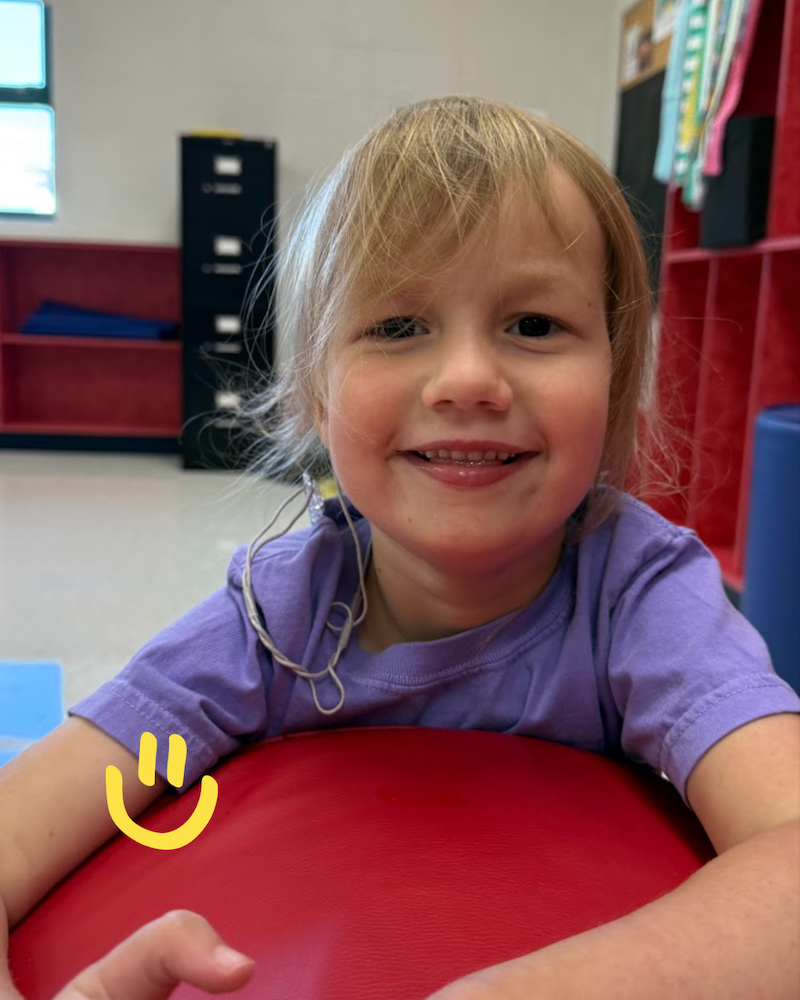
Today, Rosie is six years old and full of personality.
She loves school, thrives on routine, and is working hard toward walking. Though she is largely non-verbal, she communicates in her own ways and continues to make progress.
Rachel describes her as intelligent, determined, and full of spirit.
Through social media, Rachel has connected with a small number of other families whose children share the same rare condition—turning isolation into connection.

Advice for other families
Rachel encourages parents to trust their instincts—even when the path to answers is difficult.
“Our persistence paid off,” she says.
She also wants families to know that a cerebral palsy diagnosis does not always tell the whole story. Research suggests that up to one-third of individuals diagnosed with cerebral palsy may have an underlying genetic condition, either as the primary cause of their symptoms or in addition to other factors such as birth injury.
If your child has a diagnosis like cerebral palsy but also has additional features—such as hearing loss, seizures, developmental differences, or other unexplained symptoms—it may be worth asking whether genetic testing could provide more answers. For Rachel and Rosie, pursuing genetic testing revealed critical information that helped explain symptoms, guide future care, and provide answers for the entire family.
Wondering if genetic testing is right for your child?
Exome testing can help identify the underlying cause of developmental delays, unexplained symptoms, or complex medical histories.
In some cases, it can also uncover additional health risks and inform care for additional family members.
If you think genetic testing may be appropriate for your child, talk with your doctor about next steps or read our genetic testing guide for families.