
.png)







Key takeaways
- Broader access to rapid genome sequencing was associated with a 35% diagnostic rate across pediatric inpatients.
- Non-ICU inpatient wards had the highest diagnostic yield by hospital unit at 43%.
- Patients evaluated for faltering growth had the highest diagnostic yield overall at 63%.
- Hospital-wide implementation may expand access to genomic diagnosis without significantly increasing genetics staffing.
Rapid genome sequencing can benefit children across inpatient care settings
For many children with rare genetic conditions, the path to a diagnosis can be long, complex, and emotionally taxing for families. In the inpatient setting, where children are often facing urgent or unresolved medical challenges, earlier access to genetic answers can help clinicians make more informed decisions and guide care more quickly.
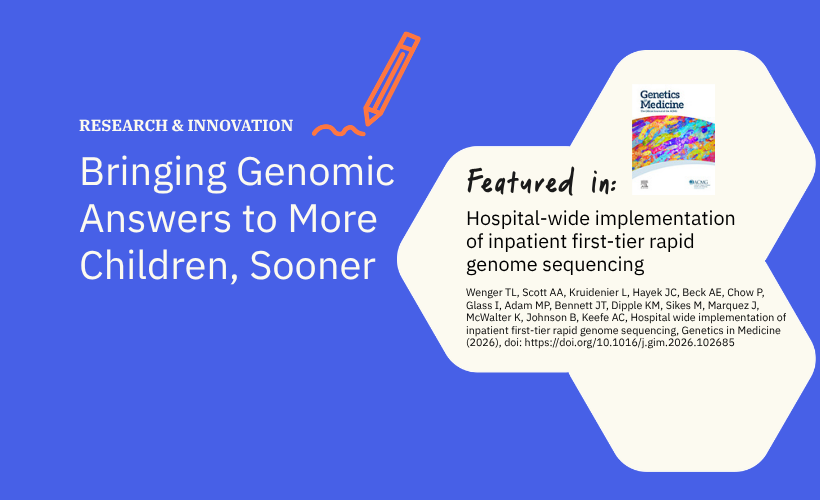
A new study published in Genetics in Medicine, an official journal of the American College of Medical Genetics and Genomics, highlights what is possible when rapid genome sequencing is implemented more broadly across pediatric hospital care.
Conducted in collaboration with the clinical genetics team at Seattle Children’s, the study evaluated 1,000 pediatric inpatients who received first-tier rapid genome sequencing across the neonatal intensive care unit, pediatric intensive care unit, cardiac intensive care unit, and non-critical care inpatient wards over a 3.5-year period. The findings support a scalable model for expanding access to genomic diagnosis beyond traditional critical care settings.
Historically, rapid genome sequencing has most often been associated with critically ill infants in intensive care units. That approach has helped many newborns and infants with complex presentations receive answers sooner, often when time is critical.
But this study suggests the value of rapid genome sequencing extends well beyond the NICU, PICU, and CICU.
By transitioning from limited use to broader hospital-wide implementation, Seattle Children’s was able to bring rapid genome sequencing to more pediatric inpatients, including children on non-critical care hospital wards. This shift helped identify genetic diagnoses in patients who may not have previously been considered for rapid testing.
The result: more children had the opportunity to receive timely, actionable genetic answers during hospitalization.
Key findings from the study
The study found that broader access to rapid genome sequencing was associated with meaningful diagnostic and operational benefits, including:
- 35% of patients received a genetic diagnosis
- 64% of genetics consults resulted in ordering rapid genomic sequencing
- Non-ICU inpatient wards demonstrated the highest diagnostic yield of any hospital unit at 43%
- Patients evaluated for faltering growth had the highest diagnostic yield overall at 63%
The findings related to faltering growth were especially notable. Among patients evaluated for faltering growth, researchers identified 37 genetic diagnoses in 36 patients, including four patients with dual diagnoses.
This challenges assumptions about which hospitalized children may benefit most from rapid genome sequencing. Children with faltering growth may have underlying genetic conditions that are missed, diagnosed late, or never referred for outpatient genetics evaluation. Earlier testing during hospitalization may help clinicians identify the root cause sooner and inform management in ways that can improve both immediate and long-term care.
A scalable model for genomic medicine in hospitals
One of the most important takeaways from the study is that broader implementation of rapid genome sequencing may be feasible at the health system level.
The publication demonstrates proof of concept that an inpatient genetics consult service can adapt workflows to efficiently provide such care without substantial changes to staffing model. That is critical for health systems facing growing demand for genetics services and long outpatient wait times.
By making rapid genome sequencing available more broadly during hospitalization, health systems may be able to:
- Reduce delays in diagnosis
- Improve clinical decision-making during inpatient care
- Decrease bottlenecks in outpatient genetics clinics
- Support more efficient care pathways
- Expand access to genomic medicine for children who might otherwise be missed
Seattle Children's also found that broad implementation of rapid genome sequencing eliminated race-based disparities in access to testing, underscoring the potential for broader genomic testing models to support more equitable care delivery.
Why this matters for families and clinicians
For families, receiving a diagnosis can be a turning point. A genetic diagnosis may provide an explanation for a child’s symptoms, connect families with more appropriate specialists, guide treatment or management decisions, and help avoid additional diagnostic testing.
For clinicians, rapid genome sequencing can provide critical information when evaluating children with complex or unresolved medical presentations. Earlier answers can help teams make more informed decisions during the same hospitalization, rather than waiting for outpatient follow-up or prolonged diagnostic workups.
This is especially important for children who do not fit the traditional profile of a critically ill infant in the ICU but may still have an underlying genetic condition driving their medical needs.
Building toward broader access to genomic answers
The Seattle Children’s study adds to a growing body of evidence supporting the earlier integration of genomic testing into pediatric care. It also offers a practical blueprint for health systems looking to make genomic medicine a more routine part of inpatient care.
At GeneDx, we believe more children should have access to timely, actionable genetic answers because it can make a meaningful difference in their care. By working with health systems and clinical partners, GeneDx is helping translate evidence into practical approaches that expand access to genomic testing across care settings.
Rapid genome sequencing has already changed what is possible for critically ill infants. This study shows its impact may be even broader — offering a path to earlier diagnosis, more informed care, and more equitable access for hospitalized children across the pediatric care continuum.