.png)








Key takeaways
- A genetic diagnosis can turn uncertainty into a path forward, helping families understand the cause of disease and take action.
- Diagnosis can inform clinical care, connect families with specialists and communities, and create opportunities for research and treatment development.
- Diagnosis Drives Action brings together patients, families, clinicians, and more than 60 advocacy organizations and community leaders to demonstrate the real-world impact of genetic testing.
How a diagnosis drives action
For families navigating a rare disease, the moment of diagnosis is often remembered as the end of a long period of uncertainty. Months. Years. Sometimes decades spent searching for answers. And for these families, every day without answers brings heartbreak and worry.
But a genetic diagnosis is also the beginning of something new in their journey. It is a care plan where there wasn't one before. A community where a family once felt alone. A pathway to treatments, services, research opportunities, and hope.
Most importantly, it is the ability to take action.
For years, conversations about rare disease have focused on the diagnostic odyssey, the lengthy and often frustrating search for answers – often taking 5 years or more. That journey is challenging for families living it every day. With a diagnosis, everything changes.
Across patient communities, clinician practices, and advocacy organizations, we hear the same message again and again: answers create momentum. Answers unlock action. Answers change lives.
Diagnosis Drives Action is built around a simple idea: a diagnosis is not the end of the story. It is the catalyst for what comes next. Whether that means accessing specialized care, finding a supportive community, participating in research, informing family planning, or preparing for future therapies, a diagnosis helps families move forward.
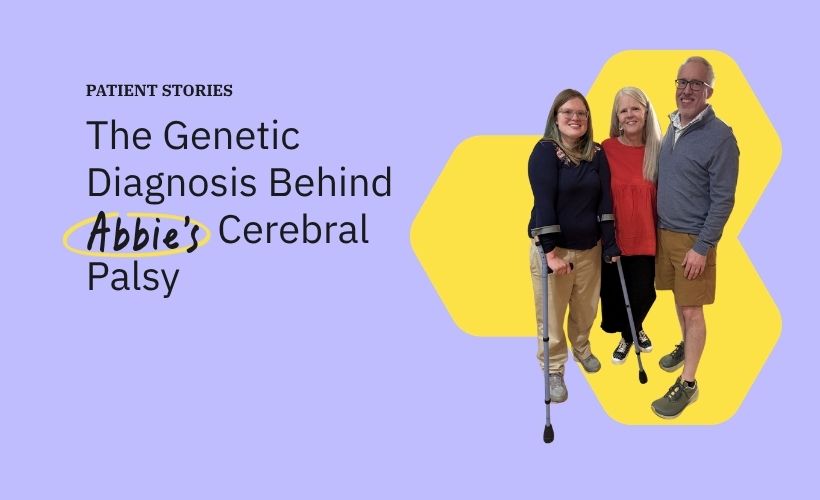
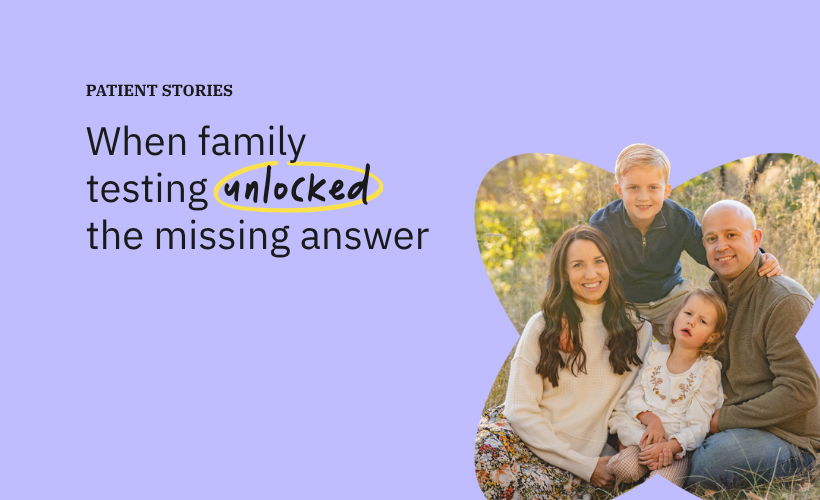
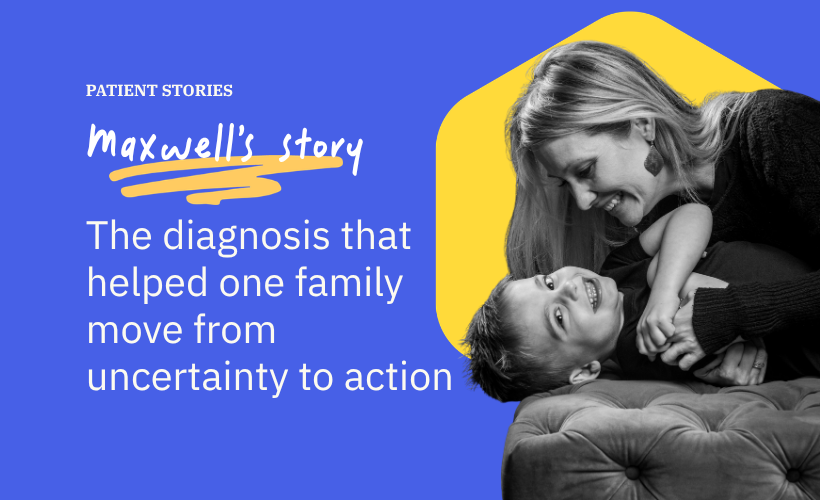
To support this, GeneDx partnered with more than 60 patient advocacy organizations and community leaders who shared what a genetic diagnosis means to the families they serve. While every journey is unique, their stories reveal a common theme: a diagnosis creates a path forward.
The impact of getting answers sooner
Getting to a genetic diagnosis sooner can change what happens next for families. GeneDx tests can provide answers in just weeks, helping families move from uncertainty to clarity faster. For children with developmental or intellectual delays, genetic testing has also been associated with 79% fewer hospitalizations in the year after testing, underscoring how answers can help shift care from reactive to more informed and proactive. And while cost concerns can be a barrier, coverage is available for 98%+ of people with commercial insurance who qualify for outpatient exome sequencing.
These proof points reinforce what families, clinicians, and advocacy organizations know firsthand: a diagnosis can create momentum across care, community, research, and hope.
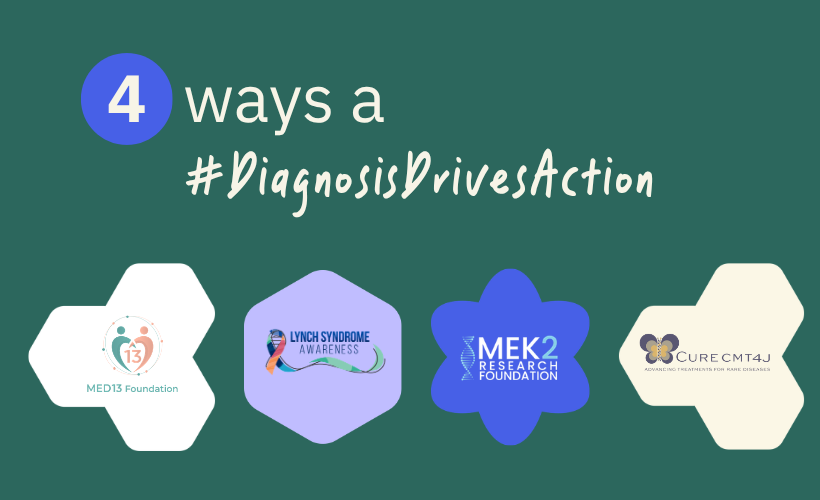
Four ways a diagnosis drives action
Their stories demonstrate that the value of genetic testing extends far beyond a diagnosis itself.
Answers
For many families, diagnosis means finally understanding the cause behind years of unanswered questions.
“A genetic diagnosis doesn't change who your child is, it changes what comes next. It transforms years of uncertainty into direction... and gives families something every parent deserves: answers and hope.” - The MED13L Foundation
Care and Clinical Action
A diagnosis can guide clinical management, connect families with experts, and open doors to new opportunities for care and research.
"A genetic diagnosis brings answers, guides the best possible clinical care, connects families, and provides a direction for initiating research and navigating the drug development process.” - MEK2 Research Foundation
Prevention and family health
Genetic insights often extend beyond a single individual, helping families make informed decisions for generations to come.
"A genetic diagnosis has the power to save not just one life, but an entire family tree." - Lynch Syndrome Awareness and Education
Research and treatment development
A diagnosis can help move a rare disease community from searching for answers to advancing potential therapies.
"A diagnosis provided answers and a path forward toward finding other families, creating a community, and spearheading research into treatments. Now, we are ready to treat the first patient in our gene therapy clinical trial." - CureCMT4J / Talia Duff Foundation
Together, these stories reinforce what GeneDx has long believed: the value of genetic testing goes beyond providing answers. It helps families, providers, and researchers make better decisions and take action.
Building a community around action
Diagnosis Drives Action is designed to go beyond awareness.
It is a platform for families, clinicians, advocacy organizations, and rare disease communities to share their stories and demonstrate the real-world impact of genetic testing. By bringing together voices from across the rare disease ecosystem, we hope to showcase what becomes possible when uncertainty turns into understanding and understanding into action.
We will continue to add new patient stories, advocacy partner perspectives, and community voices highlighting how a diagnosis can influence care, create connection, inform decisions, and inspire hope.
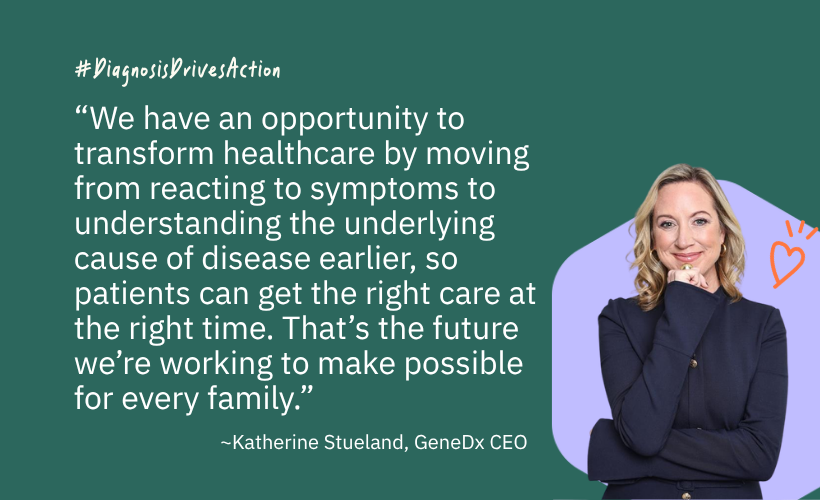
“Diagnosis is where better care begins. For too many families, getting an answer still takes years, even when we can deliver one in days. Earlier diagnosis can change the entire trajectory of care, from treatment and clinical decisions to give families a clear path forward. We have an opportunity to transform healthcare by moving from reacting to symptoms to understanding the underlying cause of disease earlier, so patients can get the right care at the right time. That’s the future we’re working to make possible for every family.” - Katherine Stueland, GeneDx CEO