






Key takeaways:
- Genomic testing may inform care beyond diagnosis. Among patients with pathogenic or likely pathogenic findings leading to a definitive diagnosis, 62% had results considered medically actionable, with potential to inform treatment, surveillance, risk mitigation, or care optimization.
- Gene discovery can create answers after testing. GeneDx’s contributions of more than 105,000 candidate-gene findings to GeneMatcher supported 103 collaborative publications and ultimately enabled 792 patients to receive definitive diagnoses.
- Data sharing advances scientific understanding. More than 90% of publications resulting from GeneDx’s candidate-gene contributions led to validated gene-disease associations and gene upgrades, showing how today’s findings can contribute to future diagnoses.
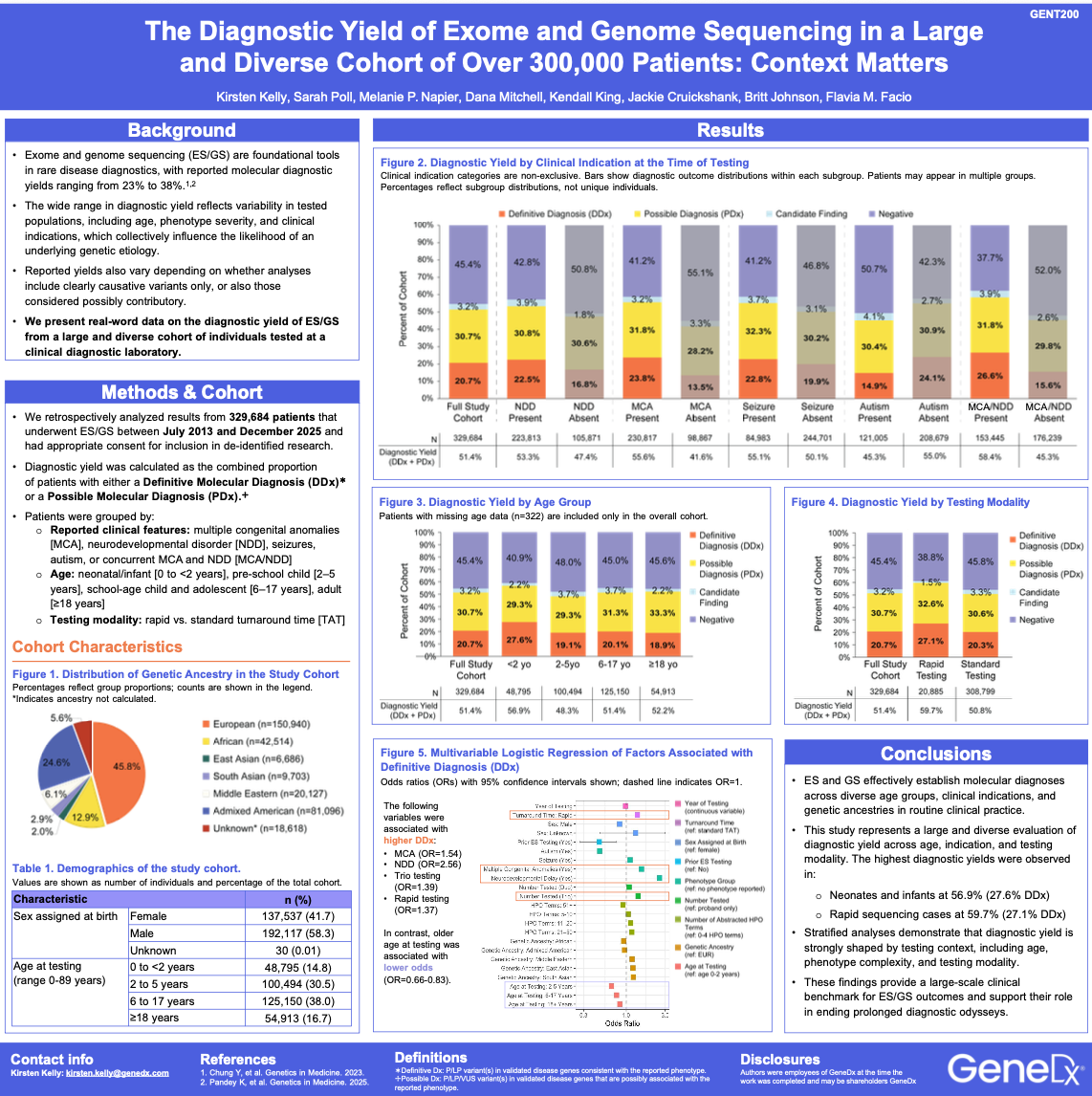
- Diagnostic yield varies by age and testing approach. Overall diagnostic yields reached 57% in neonates and infants and 60% for rapid sequencing, including definitive or possible molecular diagnoses.
How genomic testing can have an impact beyond diagnosis
What happens after genomic testing provides an answer? And what happens when it doesn’t, at least not yet?
New research presented by GeneDx at the National Society of Genetic Counselors Annual Conference highlights how the value of genomic testing can extend well beyond the initial result.
Drawing on one of the largest real-world datasets of exome and genome testing, GeneDx researchers showed that definitive diagnostic findings have the potential to inform medical management and disease prevention. Separate research demonstrates how GeneDx’s long-standing commitment to sharing candidate-gene findings through GeneMatcher, and subsequent collaboration, is helping advance gene discovery and turn previously uncertain findings into definitive diagnoses.
Together, the findings illustrate a powerful cycle: genomic testing generates answers and data; data drives discovery; and discovery can create new answers for patients and families.
What genomic testing research reveals about medical actionability
A genetic diagnosis can explain why. But for patients, families and clinicians, another question quickly follows: What can we do with that information?
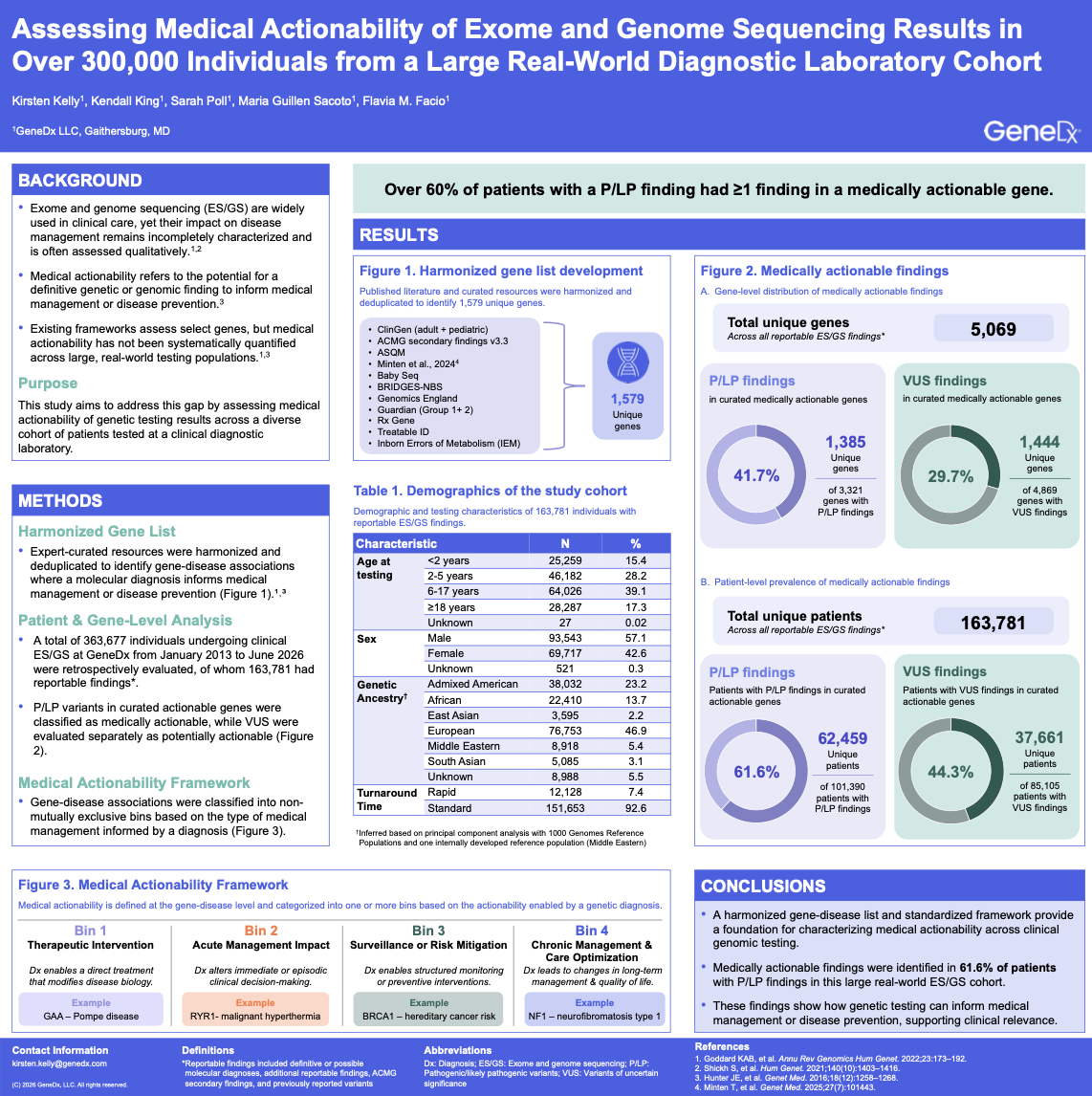
Medical actionability refers to the potential for a genetic or genomic finding to inform medical management or disease prevention. At NSGC, GeneDx presented on the curation of a harmonized list of medically actionable genes and a standardized framework developed for evaluating that potential.
The framework considers four ways genomic information may inform care: therapeutic intervention, surveillance and risk mitigation, acute management, and chronic management or care optimization.
Using more than 300,000 real-world exome and genome results, 62% of patients with pathogenic or likely pathogenic findings had findings categorized as medically actionable. The analysis also found that 44% of patients with VUS findings had a VUS in a gene included in the curated medically actionable gene set.
This work reinforces an important point: the value of genomic testing isn’t simply finding an answer. It’s understanding what that answer may make possible.
How GeneMatcher collaborations advance gene discovery
The impact of genomic testing does not necessarily end with the patient receiving a test today.
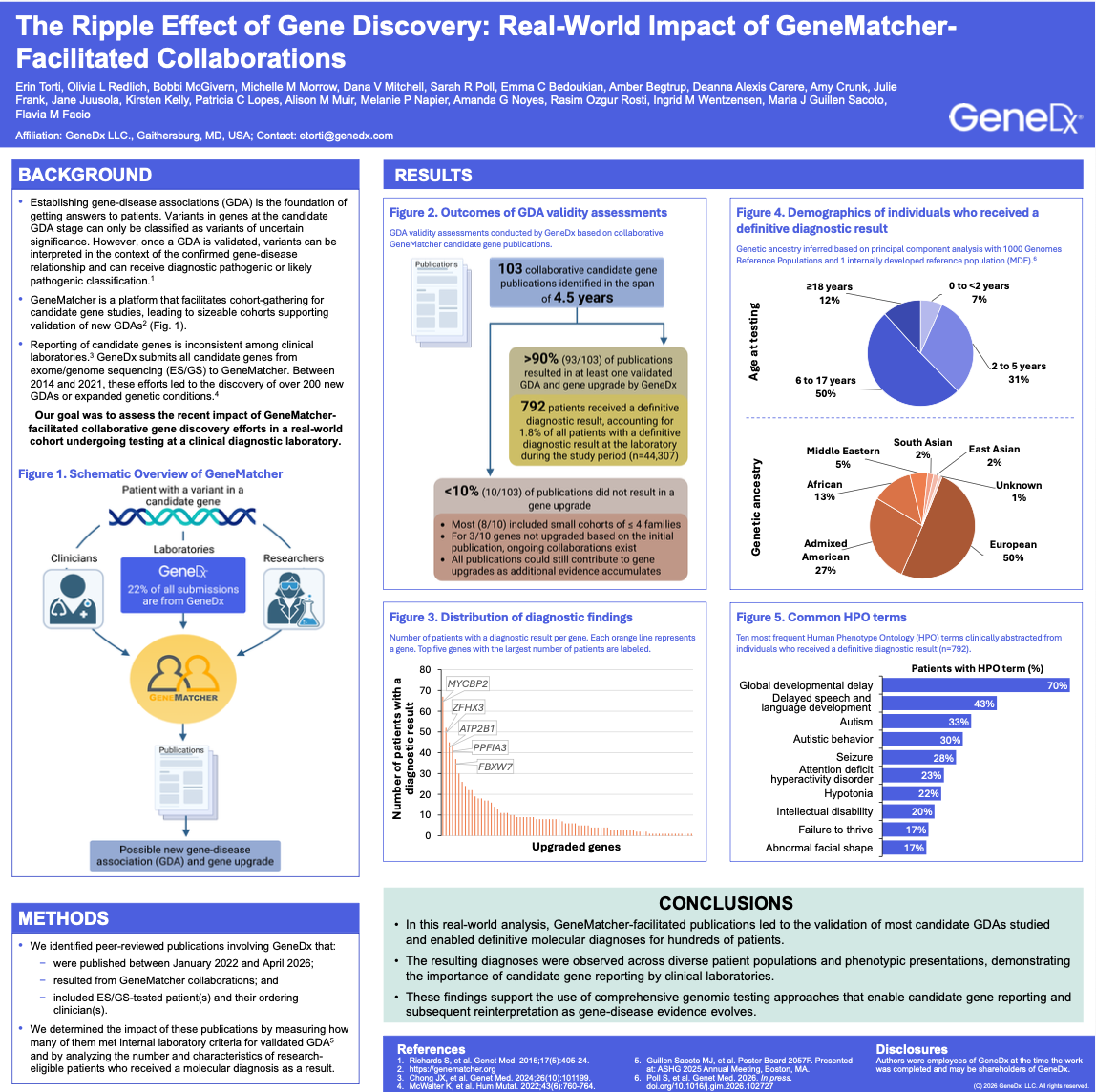
Another study presented at NSGC examined GeneDx's contributions to GeneMatcher, a global platform that connects clinicians and researchers working on candidate genes that may be associated with human disease.
GeneDx has contributed more than 105,000 candidate-gene findings, accounting for approximately 22% of GeneMatcher submissions. Over a 4.5-year study period, GeneDx data contributed to 103 collaborative candidate-gene publications.
The downstream impact was significant.
More than 90% of those publications resulted in at least one validated gene-disease association and a GeneDx gene upgrade. Those upgrades ultimately enabled 792 patients to receive definitive diagnostic results, accounting for 1.8% of all patients who received a definitive diagnosis in the study period.
That creates a powerful ripple effect.
A patient tested today may have a finding in a gene that is suspected, but not proven, to cause a genetic condition. In sharing these findings and collaborating with researchers and clinicians around the world, evidence can accumulate and, in time, a candidate gene can become a validated disease-causing gene. And as scientific and clinical understanding evolves, patients who previously lacked a diagnosis may receive one.
In other words, every candidate gene finding has the potential to contribute not only to one patient's diagnostic journey, but to a growing body of knowledge that can help other families find answers.
How age and testing approach influence diagnostic yield
GeneDx also presented diagnostic yield data shared previously from a cohort of 329,684 patients, examining how factors including age, phenotype and testing approach influence the likelihood of receiving a diagnosis.
The findings reinforce the value of comprehensive genomic testing, particularly early in the diagnostic journey. Overall diagnostic yield reached 57% among neonates and infants and 60% for rapid sequencing, underscoring the opportunity to identify a definitive or possible molecular diagnosis when answers may be particularly important for clinical decision-making.
Why every result matters beyond one patient
Taken together, the research presented at NSGC demonstrates a broader view of the value of genomic testing.
It can help deliver an answer. That answer may help inform patient management. And the data from patients who do not have answers can contribute to discoveries that help the next patient get diagnosed.
With hundreds of thousands of exome and genome results informing this research, GeneDx continues to demonstrate how genomic data at scale can help shorten diagnostic journeys, deepen our understanding of genetic disease, and turn scientific discovery into meaningful answers for patients and families.