






Key takeaways:
- GeneDx’s ASHG 2026 research identified a definitive molecular diagnosis in approximately 14% of 102,006 individuals with autism or autistic features who underwent exome sequencing—one of the largest cohorts of its kind. [1]
- The findings compare with published diagnostic yield ranges of 6–10% for chromosomal microarray (CMA) and 0.4–5% for Fragile X testing. [1]
- The findings support exome sequencing as a valuable diagnostic tool for individuals with autism or autistic behavior. [1]
- An underlying genetic diagnosis may inform anticipatory medical guidance, support needs, and connections to condition-specific resources. [2]
New insights from an autism cohort of more than 100,000 individuals
For many families of individuals with autism or autistic features, a genetic answer can open the door to more informed medical guidance, more specific resources, and a clearer understanding of their needs. New research from one of the largest cohorts of its kind involving more than 100,000 people, shows how often that answer may be within reach. [1] According to the Centers for Disease Control and Prevention, about 1 in 31 (3.2%) of 8-year-old children in the U.S. were identified with autism spectrum disorder in 2022, up from 1 in 36 in the 2020 data. [9]
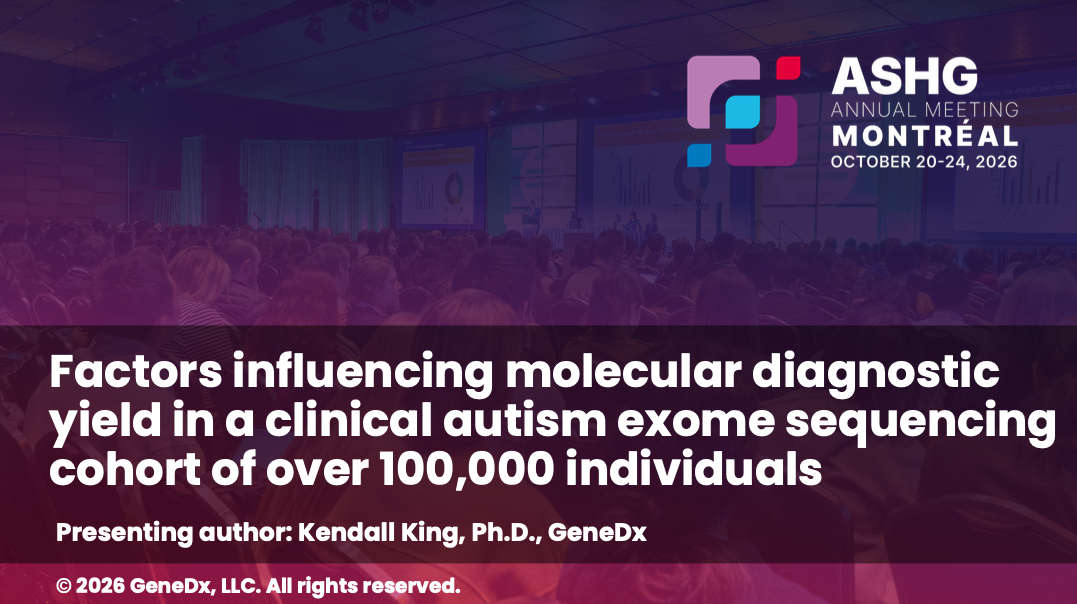
Presented at the American Society of Human Genetics (ASHG) 2026 Annual Meeting, the study examined clinical exome sequencing results from 102,006 individuals with autism or autistic features. Approximately 14% received a definitive molecular diagnosis—a genetic finding associated with their reported clinical features and the expected pattern of inheritance. Each finding offers an opportunity to better understand an individual’s clinical picture. [1] By comparison, published diagnostic yields for individuals with autism range from 6–10% for chromosomal microarray (CMA) and 0.4–5% for Fragile X testing. [1]
These findings from such a large cohort support exome sequencing as a valuable diagnostic tool for individuals with autism or autistic behavior. [1]
What exome sequencing revealed about genetic diagnosis
The value of a genetic diagnosis reaches beyond having a name for a condition. Depending on the underlying condition, it may help clinicians anticipate associated medical concerns, inform prognosis, and guide conversations about educational or therapy support needs. It can also connect families with gene-related support groups and provide more specific family counseling. These possibilities can make a genetic answer meaningful in everyday life. [2]
In the study, 30% of patients with definitive diagnostic findings had results in medically actionable genes. [1] Identifying an underlying genetic condition may help clinicians consider associated medical needs and opportunities for earlier intervention.
Seeing the whole person: How co-occurring features relate to diagnostic yield
Among individuals referred for exome sequencing in this study, 97% had additional neurodevelopmental disorders. Definitive diagnostic yield was approximately 15% among those with another neurodevelopmental phenotype, 19% among those with multiple congenital anomalies, 20% among those with epilepsy, and 27% among those with cerebral palsy. These findings highlight the value of considering a person’s broader clinical picture when exploring genetic testing. [1]
How genetic findings may inform care
Autism is a complex, multifactorial neurodevelopmental condition with a strong genetic component and many different genetic contributors. [3, 4] That diversity makes a broad genetic evaluation especially valuable when a person’s clinical features alone do not point to a clear underlying condition.
Exome sequencing evaluates a broad set of genes simultaneously. In a cohort of this scale, that approach offers a powerful way to explore a diverse genetic landscape and identify diagnoses that bring greater clarity to a complex clinical picture. [1]
A foundation for the future of autism research
With more than 100,00 individuals represented, GeneDx’s findings add substantial real-world evidence to the conversation about genetics and autism. [1] They also invite exciting questions for future research: What more can we learn about the relationship between genetic findings and co-occurring conditions? How might genetic information help shape more individualized support? And how can we better understand what a genetic diagnosis means for people over time?
For individuals with autism who have co-occurring developmental or medical concerns, the findings reinforce the relevance of discussing broad genomic testing as part of a comprehensive evaluation. [1]
GeneDx supports guideline-driven genomic sequencing as part of the clinical evaluation for individuals with autism spectrum disorder when autism occurs alongside global developmental delay, intellectual disability, seizures, or congenital anomalies. [5–7]
There is reason for optimism. A genetic answer may open the door to more informed medical guidance, more specific resources, and a clearer understanding of an individual’s needs. [2] This research provides a foundation for further investigation. The next opportunity is about bringing the questions that matter to individuals, families, and clinicians into focus, and continuing to explore how genetic knowledge can support care.
For clinicians: Learn more about what exome sequencing could mean for your patients with autism or autistic features.
For individuals and families: Ask your healthcare team whether a genetic evaluation may offer useful information about you or your loved one’s broader health and support needs.