






Key takeaways:
- AI supports expert interpretation. AI and machine learning can help prioritize and organize large volumes of genomic data, but prioritization is not diagnosis.
- Data quality and diversity matter. Dataset composition, representativeness, and quality are essential considerations for model performance.
- Responsible AI requires expert oversight. Tools need rigorous testing and validation, with experts retaining responsibility for final decisions.
- Patients remain the purpose of the work. Scaling analysis should support research that seeks to improve access, inform care, and identify opportunities for patients.
How AI and machine learning support genomic interpretation
AI themes have long been a part of the National Society of Genetic Counselors (NSGC) programming, but often, AI conversations lived in a crowded field focused more on siloed uses such as chatbots and clinical documentation.
But at the 2026 conference in Baltimore, three distinguished perspectives came together in one much larger, meaningful conversation about AI in genomics, asking: How can we advance the field forward in using artificial intelligence and machine learning responsibly to make sense of rapidly growing genomic data?
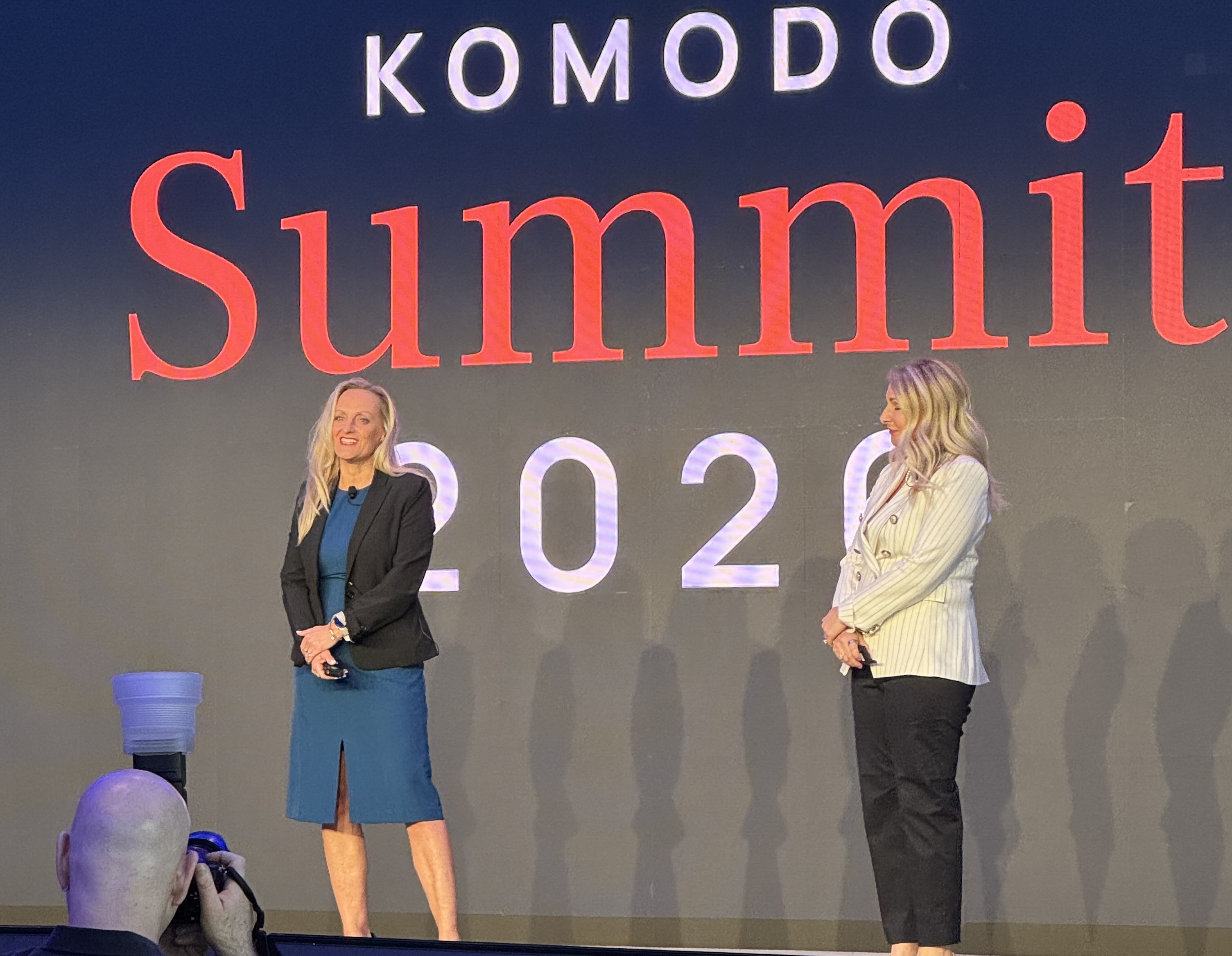
Moderated by GeneDx Medical Affairs Director and genomic research thought leader, Flavia Facio, and led by KT Curry, Field Application Scientist at Genomenon, the scientific session connected how the technology works, how it performs across diverse populations, and how it can inform access and coverage.
The response at NSGC suggests the appetite for these depth conversations is strong.
Hundreds of attendees sought out the session despite competing programming—namely the newest generation of genetic counselors and students—and they kept the conversation going long after the formal program ended.
Here’s what the panel explored and why it matters.
Angel Morrow, Director of Data Science at Genomenon, laid the foundation for how AI and machine learning work, including why a confident-sounding AI answer is not the same as a sourced one.1 Next, Yuya Kobayashi, Principal Scientist, Genetic Data Insights at Labcorp, explored machine learning in variant interpretation and lessons from diverse populations.2 Finally, Colton Frazer, Director of HEOR at GeneDx, examined how genomic and longitudinal real-world data can inform health economic and outcomes research, access and coverage.3 A top takeaway from the session is how necessary AI-informed tools are.
“We need these AI-informed tools because we’ve gotten to an age where data is just too much, and we cannot see patterns in the data the same way that AI-informed tools can,” Facio said.
That challenge is particularly clear in genomic medicine. A single genome can generate roughly 5 million variants that must ultimately be narrowed to the one or two potentially reported to a patient.4–6 Doing that requires integrating allele frequency, molecular consequence, inheritance, disease validity, phenotype and knowledge of the relevant gene or genomic region. AI and machine learning can help prioritize and organize that information so experts can focus their attention where it is most likely to matter.
But prioritization is not diagnosis. That distinction ran throughout the session.4
The goal is not to remove people from genomic interpretation. Models can help filter, rank and identify patterns within enormous datasets, while experts are still needed for ambiguous evidence, novel biology, contextual interpretation, and the ethical stakes of final decisions.1
“AI, when used appropriately, is a tool that can help experts do more at scale,” Frazer said.
Why data diversity and quality matter in genomics
While scale was one major theme of the session, diversity and equity were another.
Genomics has a longstanding representation problem. Many datasets disproportionately represent people of European ancestry, which matters because the performance of any statistical or machine-learning tool is constrained by the data informing it.2,7,8 The session framed diversity not simply as a demographic consideration, but as a model-performance requirement: a large dataset isn’t enough on its own, and its composition, representativeness, and quality matter just as much.4
Facio emphasized diversity should be considered broadly— it includes ancestry, race and ethnicity, but also diversity in clinical presentations and in the populations being tested.
In a study of 1.6 million people undergoing genetic testing, about 40% had at least one variant of uncertain significance (VUS), and people from historically underrepresented race, ethnicity, and ancestry groups were more likely to receive an uncertain genetic test result.2,4,9 Uncertainty, in other words, is both a scientific problem and an equity problem. That raises an important question: could machine learning make the disparity worse?
Kobayashi presented Labcorp data suggesting the answer doesn’t have to be yes. Incorporating machine-learning tools reduced VUS observations in 21% of patients undergoing germline genetic testing and helped reduce VUS-rate disparities for historically underrepresented populations.2 The impact varied by model and data type, and it appeared to be driven by the availability of the underlying data rather than by who the model was trained on.2
Facio said the takeaway isn't that AI inevitably perpetuates existing bias, rather, those developing and applying AI need to understand what data they are using, who it represents and where its limitations lie.
Why responsible AI requires validation and expert oversight
Audience questions also pointed to another concern: if laboratories develop their own AI-informed tools, how can clinicians trust that those tools are being used appropriately?
Facio explained that an AI output does not itself determine variant classification. AI-informed results feed into established classification processes, including ACMG guidance, while tools must also undergo rigorous testing and validation before reaching production.
Morrow’s presentation echoed that principle. Models should be benchmarked against expert-curated datasets, validated on data they did not see during training, and designed so flagged or low-confidence cases are routed to a human curator before anything reaches a clinical workflow.1
In other words, responsible AI isn't AI without people. It is AI built, tested and used with expert oversight.
“We’re training and validating it with experts, and humans are always the final decision maker,”
Medical Affairs Director at GeneDx

That may also require greater transparency about what happens behind the scenes. Facio said the audience response showed there is a genuine appetite to understand how organizations are approaching these technologies and making decisions about them, without requiring laboratories to disclose proprietary information.
“We’re training and validating it with experts, and humans are always the final decision maker,” Facio said. “Good labs are using AI responsibly to help patients.”
Keeping patients at the center of AI-enabled research
The attendees also pushed the panel beyond algorithms themselves.
Frazer said students and newer genetic counselors repeatedly asked how the patient voice is incorporated into large-scale research. In the example he presented, patients had opted in to having their de-identified data included, and he stressed that the purpose of this work is ultimately to benefit patients, whether by expanding access to genetic testing or by helping identify people who may be eligible for clinical trials or emerging treatments.
His presentation showed how de-identified genomic data from our internal knowledgebase can be linked with longitudinal real-world claims data through tokenization, without sharing patient identities, and how machine learning can help identify people whose clinical journeys resemble genetically confirmed cases. Those insights can support research such as clinical-trial site selection by showing where potentially eligible patients may already be receiving care.3
It is an important reminder that scaling analysis is not the end goal. Patients are.
Continuing the conversation about responsible AI in genomics
For Facio, getting this conversation into the NSGC scientific program took several attempts over roughly three years. She and Curry kept advocating for a discussion centered on AI in variant interpretation and health outcomes research.
But after their session kept attendees talking well beyond the scheduled Q&A, it’s clear this is a conversation the genomics community is ready to continue. For a field grappling simultaneously with exploding data volumes, persistent uncertainty, and questions about how AI should be used, perhaps that enthusiasm is itself an important takeaway and suggests this may mark a turning point in how the genetics community talks about AI.
Part of what makes that conversation worth continuing is what the research itself highlights: machine learning models can integrate and interpret vast amounts of information in ways that exceed human cognitive capacity.10 That is their comparative advantage. But model performance remains contingent on three factors:
- The quality of the data source
- The diversity of the data source
- Human experts remaining in the loop
The appropriate framing, therefore, is not human versus machine. It’s how to use these tools thoughtfully, transparently, and equitably, while keeping experts and patients at the center of the work.