






Key takeaways:
- Laboratories can differ significantly in the evidence and datasets they use to interpret genetic variants, which can affect the clarity and confidence of results.
- Rare disease experience, diverse and representative data, and specialized experts and support are three quality factors that can set laboratories apart.
- Families can ask four questions of a clinician, genetic counselor, or laboratory to compare testing options.
Why does it matter which lab runs your child’s genetic test?
For families of a child with an undiagnosed condition, a genetic test can feel like the first real step toward answers. Getting the test approved, scheduled, and completed is top of mind. But another important factor many families don’t hear about or even think about considering: the laboratory running the test.
Families, payors, and clinicians may view exome and genome sequencing as a uniform, interchangeable service. But according to research presented by GeneDx in collaboration with Cure NDD, during the 2026 NORD Breakthrough Summit, laboratories can vary significantly in the evidence and datasets they use to interpret genetic changes, also called variants.1 That difference can shape how clear, confident, and useful the test results are.

Why the lab behind the test matters
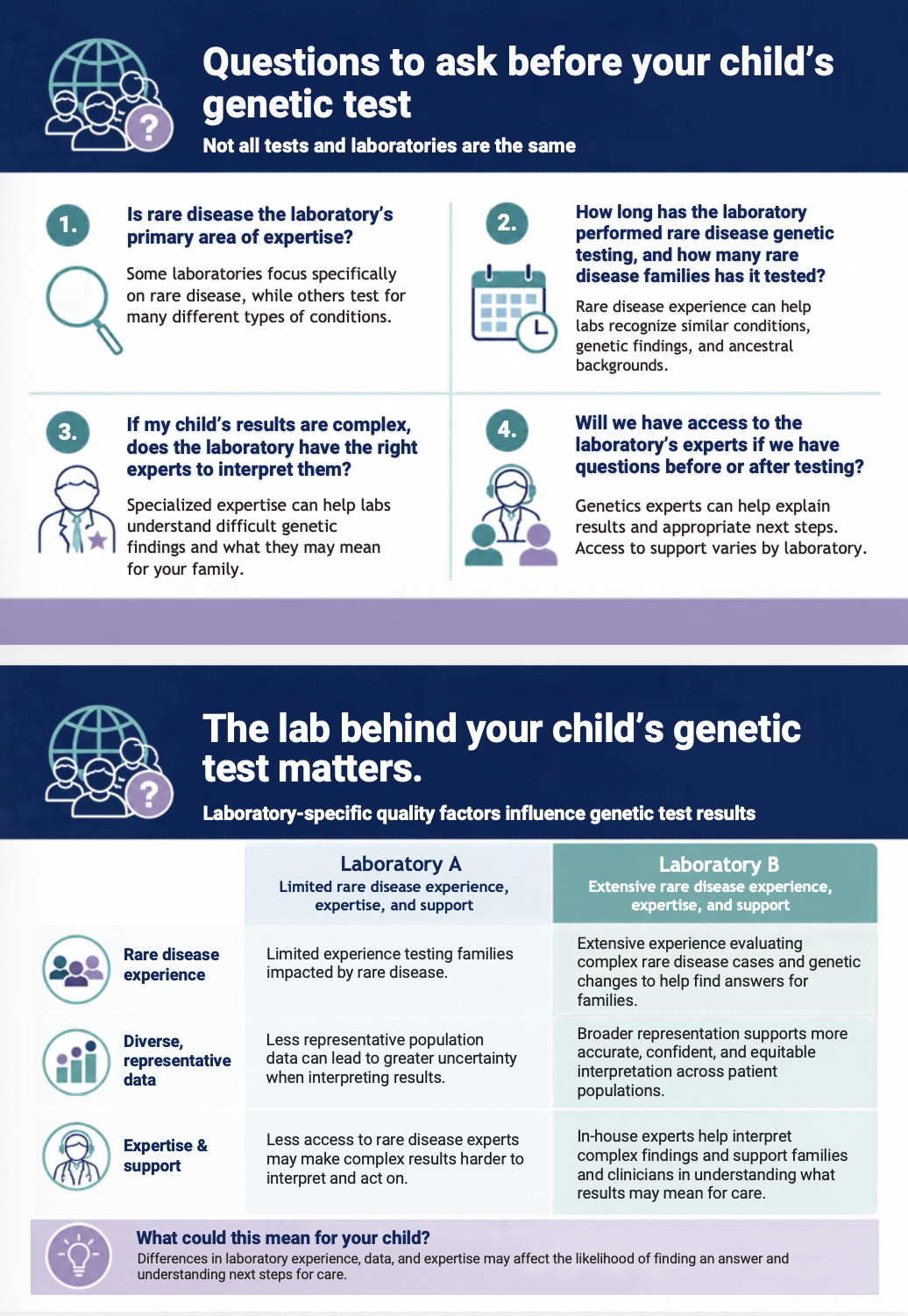
Consider two laboratories running what looks like the same test. Three “quality factors” can set them apart:1
- Rare disease experience. Some laboratories don’t specialize at all, while others focus on one or many disease areas, such as cancer. Laboratories that focus entirely on rare disease routinely evaluate complex cases and genetic changes, which gives them more experience finding answers for families.
- Diverse, representative data. Labs with limited experience may rely on public databases, which have historically underrepresented much of the U.S. population. Broader representation supports more accurate, confident, and equitable interpretation across patient populations.
- Specialized experts and support. In-house experts can help interpret complex findings and help families and clinicians understand what results may mean for care. With less access to rare disease experts, complex results can be harder to interpret and act on.
Differences in laboratory experience, data, and expertise may affect the likelihood of finding an answer and understanding the next steps for care.2
What’s at stake for families
Greater diagnostic uncertainty can mean uncertain or inconclusive results, a longer diagnostic odyssey, additional testing or re-evaluation, a lost opportunity for personalized care, reactive care with higher costs, and limited support after testing. On the other hand, greater diagnostic clarity and support can mean more accurate and certain results, greater potential to end the diagnostic journey, avoidance of unnecessary tests, clearer next steps, proactive and/or targeted care management, and post-test support for families.1
“Small differences in a laboratory's interpretation can have meaningful diagnostic and treatment consequences, which is why recognizing these quality signals empowers patients to advocate for the most rigorous testing available.”

What the research found about differences between labs
To look at the bigger picture, GeneDx and CureNDD reviewed publications between 2015 and 2026 involving exome and genome sequencing in rare or undiagnosed conditions. From more than 32,000 unique search returns, they took a close look at 18 key publications that pointed to three laboratory-driven themes.1
1. How results are interpreted matters
Studies suggest that a laboratory’s approach to interpreting genetic changes directly influences the accuracy and confidence of results. Inconsistent rigor may contribute to uncertain or conflicting findings, which can prolong the diagnostic odyssey, increase costs, and complicate downstream care.1
2. Labs can classify the same variant differently
The evidence documented clinically meaningful differences in how laboratories classify the same variant. These differences stem from varying evidence thresholds and access to internal data, and they can directly influence clinical decisions and medical management for a rare disease family.1
3. Diverse data is a quality issue, and an equity issue
Multiple sources identified that how representative a laboratory’s reference data is plays a direct role in how well it can interpret results. Laboratories that rely on limited or non-diverse rare disease datasets may have less diagnostic confidence for underrepresented populations, which makes dataset diversity a laboratory quality issue with real implications for diagnostic equity.1
Four questions to ask before your child’s genetic test
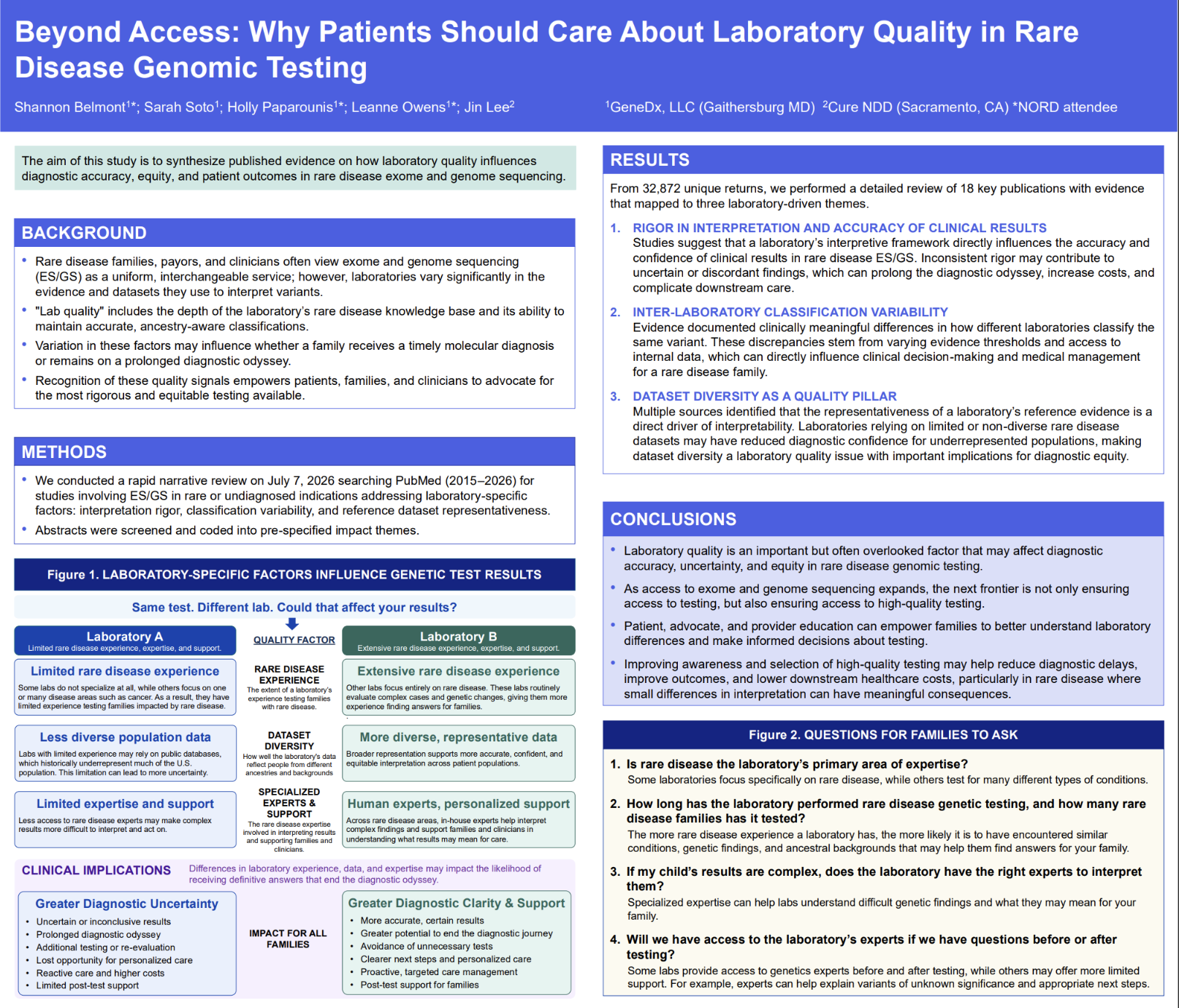
To help families navigate the uncertainty, whether they are talking with a child’s doctor, a genetic counselor, or the laboratory itself, these four questions can help them compare options.1,2
- Is rare disease the laboratory’s primary area of expertise? Some laboratories focus specifically on rare disease, while others test for many different types of conditions.
- How long has the laboratory performed rare disease genetic testing, and how many rare disease families has it tested? The more rare disease experience a laboratory has, the more likely it is to have encountered similar conditions, genetic findings, and ancestral backgrounds that may help it find answers for a family.
- If my child’s results are complex, does the laboratory have the right experts to interpret them? Specialized expertise can help a lab make sense of difficult genetic findings and what they may mean for a family.
- Will we have access to the laboratory’s experts if we have questions before or after testing? Some labs provide access to genetics experts before and after testing, while others offer more limited support. For example, experts can help explain variants of unknown significance, which are genetic changes whose impact isn’t yet clear.
From access to quality
As access to exome and genome sequencing expands, the next frontier is not only making sure families can get tested but making sure they can access high-quality testing. Educating patients, advocates, and providers about laboratory differences can help families make informed decisions and may help reduce diagnostic delays, improve outcomes, and lower downstream healthcare costs.1
Every family’s path with rare disease is different, but asking about a laboratory’s experience, data, and expert support is a simple, practical way to understand factors that can impact test results. Knowing what to ask can empower patients and families to advocate for the most rigorous and equitable testing available.
“As access to genome sequencing expands, our mission at CureNDD goes beyond just getting the test covered; we must ensure access to high-quality testing.”
“As access to genome sequencing expands, our mission at CureNDD goes beyond just getting the test covered; we must ensure access to high-quality testing," said Jin Lee, PhD, founder of CureNDD. "Small differences in a laboratory's interpretation can have meaningful diagnostic and treatment consequences, which is why recognizing these quality signals empowers patients to advocate for the most rigorous testing available.”