.svg)







Key takeaways
- Earlier answers can make a meaningful difference in the NICU, where rapid genome sequencing has been shown to change clinical management in up to 87% of infants.¹
- Many genetic conditions are not immediately recognizable in newborns, and up to 90% of diagnoses identified through rapid genome sequencing would not have been predicted based on clinical features alone.²
- NICU nurses are often among the first to recognize when a clinical picture does not fully add up, making awareness of genomic testing opportunities an important part of patient advocacy.
- A genetic diagnosis can provide more than clinical insight by helping reduce uncertainty and align families and care teams around next steps.
Why earlier genetic insights matter in the NICU
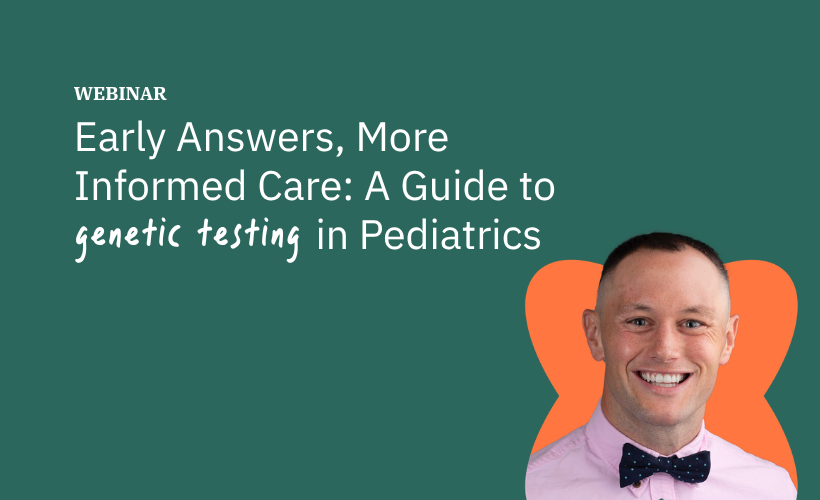
During a recent educational webinar developed in partnership with the National Association of Neonatal Nurses (NANN), GeneDx and former bedside NICU nurse Kiley Moran explored the role of rapid genomic sequencing in NICU care and what earlier genetic insights can mean for care teams, patients, and their families.
The NICU is a high-acuity, time-sensitive environment where care teams regularly make critical decisions before the full clinical picture is clear. Genetic conditions can be particularly challenging to identify in newborns because they may present with non-specific symptoms, affect multiple organ systems, or resemble more common neonatal conditions.
In fact, up to 90% of diagnoses identified through rapid genome sequencing would not have been predicted from clinical features alone.² Meaning an infant may have an underlying genetic condition even when the initial presentation does not point clearly toward one.
Rapid genome sequencing gives care teams an opportunity to look broadly for a genetic cause and potentially reach an answer sooner. Whether it identifies an underlying genetic condition or helps rule one out, that information can inform care planning and support clinical decision-making.
The potential impact can be significant. Rapid genome sequencing has been shown to change clinical management in up to 87% of infants1, and can shorten NICU length of stay by as much as 20 days and reduce unnecessary tests and procedures.³
Recognizing when rapid genomic testing may be appropriate
Several professional societies recommend exome or genome sequencing as a first-line test for patients with unexplained hypotonia, congenital anomalies, and unexplained epilepsy.4-6 For NICU teams, consideration for genomic testing may also be important when an infant's presentation remains unexplained, involves multiple organ systems, or follows an atypical clinical course. Additional factors such as severe illness without a clear cause or a family history of similar conditions may further raise suspicion for an underlying genetic condition.
No single finding automatically indicates the need for genomic testing. However, when the underlying cause remains unclear, genomic sequencing may provide valuable diagnostic insight and help inform next steps for both care teams and families.
The role of NICU nurses
Throughout the webinar, one message remained consistent: NICU nurses play an important role in recognizing when a clinical picture doesn't fully add up. With a continuous presence at the bedside, nurses are often among the first members of the care team to observe changes in an infant's condition, identify patterns that emerge over time, and recognize when a patient is not progressing as expected.
When concerns arise, bringing those observations forward can help facilitate conversations about additional evaluation, including whether genomic testing may be appropriate. While testing decisions ultimately involve the broader care team, nursing observations often provide valuable context that contributes to clinical decision-making.
A genetic diagnosis can provide more than clinical insight
While discussions about genomic testing often focus on diagnosis, the impact extends far beyond identifying a condition. Research presented during the webinar found that genomic testing in the NICU has been associated with decreased parental anxiety.7,8 And 97% of parents report value in rapid genome sequencing when a diagnosis is unclear.9 For families navigating uncertainty, a diagnosis can provide clarity, support informed conversations with the care team, and help align everyone around a shared understanding of what comes next.
In many cases, a diagnosis may inform treatment decisions or specialist referrals. In others, it may support discharge planning, care coordination, access to resources, or longer-term family planning. Regardless of the outcome, rapid genomic insights can provide a clearer path forward during an overwhelming time.
.png)