.png)








Key Takeaways
- Whole exome sequencing helped identify the genetic cause of Carlotta’s complex medical symptoms after months of inconclusive testing.
- A diagnosis of PIGN-CDG gave Carlotta’s family clarity after nearly two years of uncertainty.
- Genetic answers can do more than explain symptoms — they can help connect families with specialists, support communities, research opportunities, and future care options.
The First Signs Something Was Wrong
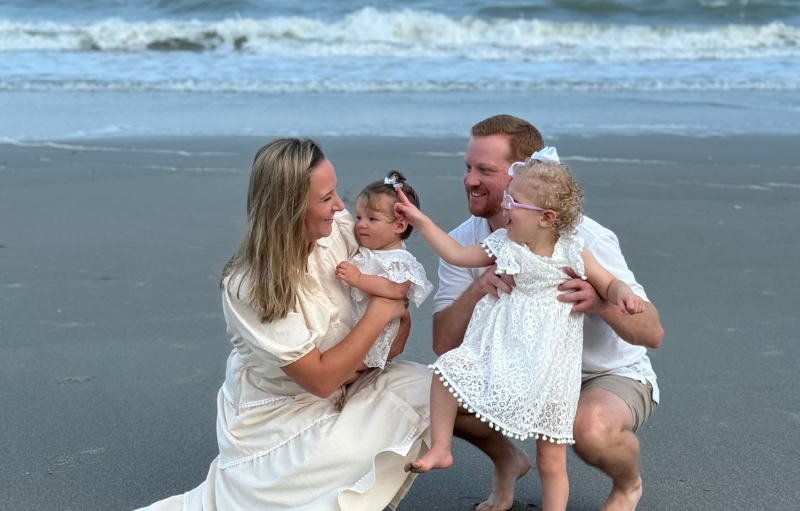
When Andrea Acosta and her family welcomed their daughter Carlotta, everything appeared normal. The pregnancy had been closely monitored, prenatal screenings were reassuring, and Carlotta was born healthy with no immediate concerns. For the first few weeks, life felt exactly as expected.
Unexplained Symptoms Led to More Questions
Around six weeks of age, Carlotta stopped gaining weight as expected and began falling on the growth chart. Her family also noticed developmental concerns, including difficulties with head control. What initially seemed like isolated issues quickly became a growing list of unanswered questions.
"We thought we had a completely healthy, normal baby girl," Andrea recalled. "Then all of a sudden, we started seeing issues."
Carlotta was referred to multiple specialists, including neurology, gastroenterology, and physical therapy. Doctors eventually identified hypotonia, a condition characterized by decreased muscle tone, but they still could not explain why these symptoms were occurring.
As months passed, new challenges emerged.
At approximately five months old, Carlotta was found to have silent aspiration, a potentially dangerous condition where liquids enter the airway without obvious signs of distress. The discovery required significant changes to her care and feeding routine.
Despite ongoing therapies, Carlotta continued reaching developmental milestones later than expected, and her family still lacked answers.
Then another complication appeared.
Shortly after her first birthday, Carlotta experienced febrile seizures severe enough to require emergency medical care. Although febrile seizures can occur in young children, the episodes ultimately led to the diagnosis of an underlying seizure disorder. At the same time, imaging studies showed unusual findings, but physicians still could not identify a root cause connecting all of her symptoms.
"It felt like every time we got one condition under control, something else would show up."
When Standard Testing Couldn't Provide Answers
Doctors explored several genetic testing options along the way, including targeted genetic panels. However, none of those tests provided an explanation.
After months of waiting, the family was finally able to meet with a geneticist who recommended whole exome sequencing. Even then, expectations were low.
"The chances are we won't find anything," Andrea remembers being told.
By that point, the family had already begun preparing themselves for the possibility that they might never know why Carlotta's health challenges were occurring.
Blood samples were submitted for both Carlotta and her parents. The testing looked not only for genetic variants in Carlotta's DNA but also whether those variants were inherited.
Then came the phone call.
After nearly 20 months of unexplained symptoms, doctors asked the family to come in and discuss the results.
Whole Exome Sequencing Revealed the Cause
To the family's surprise, exome sequencing found an answer.
Carlotta was diagnosed with a rare genetic condition in the Congenital Disorders of Glycosylation (CDG) family caused by changes in the PIGN gene. The diagnosis explained the collection of symptoms that had puzzled physicians for nearly two years, including growth concerns, hypotonia, feeding difficulties, developmental delays, and seizures.
The condition was extraordinarily rare. At the time of diagnosis, Andrea was told that just over 100 known patients had been identified worldwide.
How a Genetic Diagnosis Changed Everything
While there was no cure and no universally accepted treatment, the diagnosis changed everything for Carlotta's family.
Knowing the cause of her symptoms opened doors to specialists, research opportunities, and connections with other families facing similar challenges. Andrea quickly connected with parents across the United States and around the world through online communities dedicated to rare CDG disorders.
Most importantly, the diagnosis gave the family direction.
As Andrea explained:
What Families Can Learn from Carlotta's Story
For families navigating unexplained developmental delays, epilepsy, hypotonia, or other complex symptoms, Andrea hopes their story highlights the value of genetic testing.
Although the diagnosis did not immediately change every aspect of Carlotta's care, it provided clarity, community, and a path forward. It transformed years of uncertainty into understanding and helped the family prepare for the future.
As genetic knowledge continues to expand and more families gain access to exome sequencing, stories like Carlotta's demonstrate how a genetic diagnosis can provide far more than a name—it can provide answers. The value of exome and genome testing is not only in identifying a condition, but also in helping families understand what to expect, connect with resources, and make more informed care decisions.