






Key takeaways
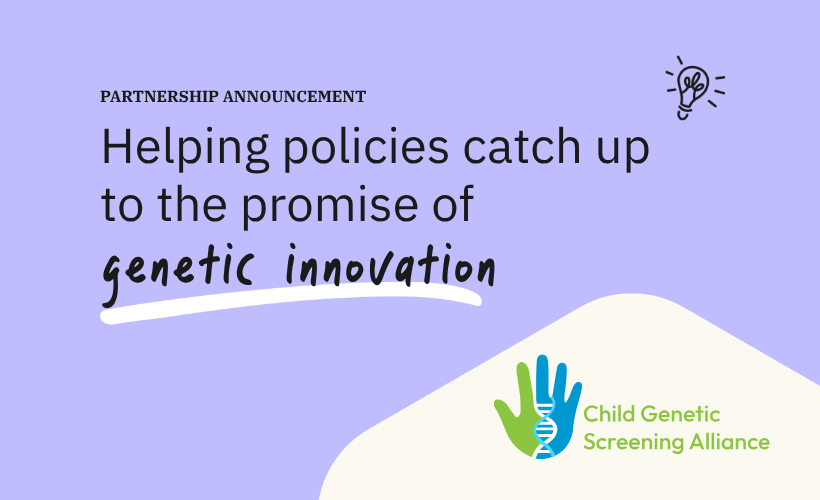
- GeneDx is a founding member of the newly launched Child Genetic Screening Alliance (CGSA).
- CGSA brings together organizations across the rare disease ecosystem to support earlier access to genetic screening and diagnosis for children.
- The alliance aims to help close the gap between advances in genetic medicine and the policies and coverage needed to make those advances accessible to patients.
More than 10,000 rare diseases have been identified, affecting over 30 million Americans¹, and at least 263 million individuals are living with rare genetic disorders, 70% of which are pediatric onset². Yet despite advances in genomic medicine, families often spend years searching for answers before receiving an accurate diagnosis.
To help address this challenge, GeneDx is proud to announce its role as a founding member of the newly launched Child Genetic Screening Alliance (CGSA), a nonprofit coalition dedicated to advancing policies and programs that support earlier diagnosis of rare, inherited genetic conditions.
The alliance brings together leaders from across the rare disease ecosystem, including BioMarin, Chiesi USA, Revvity, and Stoke Therapeutics, with the shared goal of improving access to genetic screening and diagnosis for newborns and children.
Bridging the gap between scientific progress and patient access
Leading the organization as Board Chair is Shannon Belmont, Director of Government Affairs at GeneDx, a healthcare policy and government affairs leader with more than a decade of experience advancing health policy initiatives at the state and federal levels. Throughout her career, Belmont has worked across the biotechnology, rare disease, and healthcare sectors, helping shape policy strategies that improve patient access to innovative care and technologies.
Scientific advances have dramatically improved our ability to identify genetic conditions earlier and more accurately than ever before. Comprehensive genetic testing can now provide answers in days rather than years, helping clinicians diagnose conditions that may not be detected through traditional diagnostic approaches alone.
At the same time, families continue to face significant barriers to diagnosis. Studies show that patients with rare diseases spend an average of five years seeking answers, often seeing multiple specialists before reaching an accurate diagnosis. For many conditions, these delays can result in missed opportunities for treatment, disease progression, or irreversible health impacts.
“Today, standard newborn screening looks for about 40 conditions out of more than 10,000 known rare diseases, with new discoveries nearly every day,” said Belmont. “When a condition is added to the national recommended screening panel, it can take states years to implement, which means children can go on to develop symptoms while families spend years searching for answers. The science is ready, but policies and coverage frameworks need to catch up.”
The Child Genetic Screening Alliance was formed to help close that gap by advocating for policies that support earlier access to genetic screening, diagnostic testing, and other tools that can identify rare genetic conditions sooner.
Why early diagnosis matters
The stakes are particularly high for children with rare diseases. An estimated 70% of rare diseases begin in childhood, and many are progressive in nature. For some conditions, effective treatments are available, but the opportunity to intervene may be limited if diagnosis comes too late.
Earlier diagnosis can help clinicians make informed care decisions, connect families with specialists and support resources, reduce unnecessary testing, and identify potential treatment options before symptoms become severe. As more therapies become available for genetically defined conditions, timely diagnosis is becoming increasingly important to improving outcomes.
CGSA’s work is rooted in a simple goal: helping more children receive answers before critical opportunities for care are lost. By bringing together stakeholders from across the healthcare ecosystem, the alliance aims to raise awareness of the challenges families face, support evidence-based policy solutions, and expand access to the screening and diagnostic tools that can help shorten the diagnostic journey.
Looking ahead
For GeneDx, participation in the Child Genetic Screening Alliance reflects a longstanding commitment to shortening the diagnostic odyssey for patients with rare genetic diseases.
Every diagnosis has the potential to change a family's trajectory by providing answers, informing medical management, and opening the door to treatment and support. Through CGSA, GeneDx and its fellow founding members hope to ensure that scientific advances in genomics are matched by policies that make those advances accessible to the patients who need them most.
"Every child deserves the opportunity to benefit from the latest advances in genetic medicine."
"Every child deserves the opportunity to benefit from the latest advances in genetic medicine," Belmont said. "Through the Child Genetic Screening Alliance, we're working alongside partners across the rare disease community to help make that possible."